
Home Blog

ChatGPT Empowers Clinical Decision Making with Impressive Accuracy
The large-language model (LLM)-based model, ChatGPT, had its clinical decision-making abilities put to the test in a joint study by researchers from Harvard Medical...
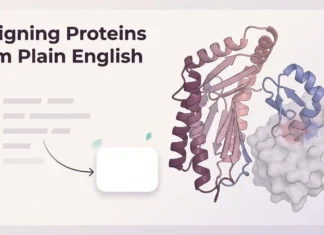
Prompteina: Designing Proteins From Plain-English Descriptions
Researchers at the University of Washington, the Allen Institute for AI (Ai2), the National University of Singapore, and the Howard Hughes Medical Institute have...
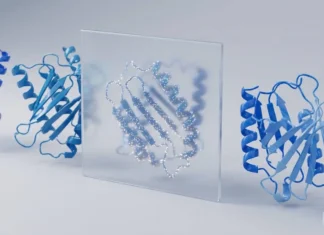
SynthID Bio: Google DeepMind Brings Invisible Watermarks to AI-Designed Proteins
Google DeepMind's SynthID Bio, published in Nature, hides watermarks in AI-designed proteins while preserving binding. How it works and its limits.
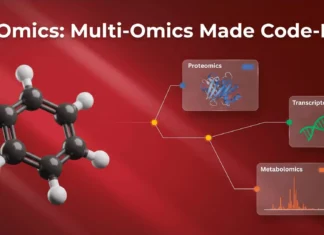
TurbOmics: A Free, No-Code Web Platform That Puts Metabolomics at the...
TurbOmics, a free web platform from CNIC and EMBL, integrates metabolomics with proteomics and transcriptomics data, no coding needed.
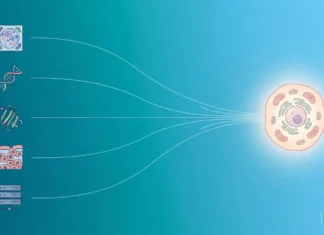
Biohub, DOE, NIH and Tech Giants Commit $1.8 Billion to Build...
Biohub, the U.S. DOE, NIH, Google DeepMind, Isomorphic Labs and Meta expand the Virtual Biology Initiative to about $1.8 billion, aiming to build open, AI-ready datasets for predictive models of human cells.

Nobel Prize 2026 in Medicine: How Optogenetics Lets Light Control the...
A light switch for the brain wins the Nobel
The 2026 Nobel Prize in Physiology or Medicine goes to Karl Deisseroth, Peter Hegemann, and Georg...
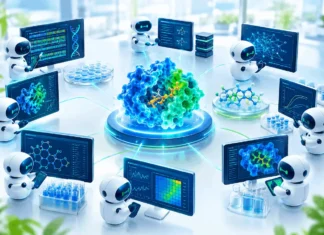
What If a Biotech Company Were Staffed by AI Agents? Meet...
Ask anyone in pharma why drugs fail, and you'll hear the same story. Roughly nine out of ten candidates who enter Phase I never...
Google DeepMind Launches AlphaGenome Atlas Covering 9 Billion Possible DNA Variants
The work behind AlphaGenome Atlas comes from a large team at Google DeepMind, led by researchers working alongside scientists from the University of Exeter...
Rosalind Workbench: OpenAI Connects AI, Genomics, and Scientific Workflows
OpenAI has introduced Rosalind Workbench, a new research-preview environment available through the ChatGPT app that brings scientific tools, specialized biology models, and data workflows...
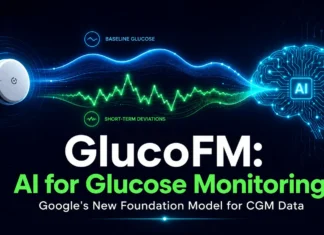
GlucoFM: Google’s New Foundation Model Reads Glucose Data Like a Language
Wearables have gotten remarkably good at estimating how much we move and how well we sleep. But glucose regulation — the hidden machinery behind...
Scientists Create a Near-Perfect Telomere-to-Telomere Diploid Human Genome Benchmark for Personalized...
For years, genomics has had a dirty little secret: even our best reference genomes have gaps. Now, a large international team of the National...
NovoTags: How AI-Designed Proteins Are Giving Scientists a Sharper View Inside...
Imagine trying to identify every resident of a bustling metropolis from a rooftop, at night, with only a handful of flashlights. That's essentially the...
Scientists Reveal How the Influenza A Virus Rewires Human Cells from...
Every winter, the influenza A virus infects millions of people. In a handful of cells, it manages to do something very hard for scientists...
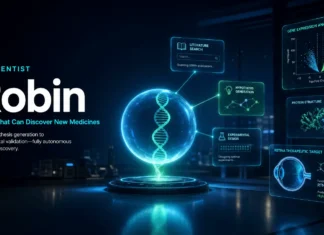
Meet Robin: A Multi-Agent AI Framework for Scientific Discovery
A team from the FutureHouse, University of Oxford and Fordham University published a paper in Nature describing something that sounds like science fiction but...
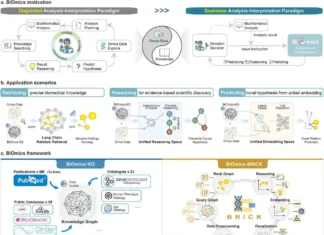
Meet BiOmics: The AI Agent Bridging Data and Biological Meaning
Biology today produces more data than anyone knows what to do with. Sequencers spit out genomes, single-cell experiments generate massive expression matrices, proteomics platforms...
Scientists Discover TB’s Metabolic “Control Switch” — A New Target for...
The interdisciplinary team, spanning researchers from the University of Surrey, Imperial College London, IISc, and others, discovered Virulence Associated Dikinase (VadK), which evolved from...
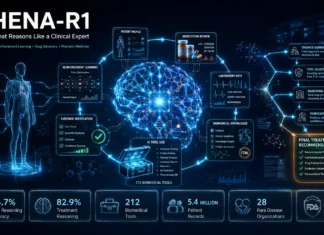
ATHENA-R1: A Reinforcement Learning AI Agent for Smarter Drug and Treatment...
Picking the right treatment for a patient is rarely a one-step decision. A doctor has to think about the disease, the patient's other health...
OpenAI Unveils GeneBench-Pro to Benchmark AI in Genomics and Translational Medicine
Here's an uncomfortable question for anyone building AI tools for genomics: can a model tell the difference between a real biological signal and a...
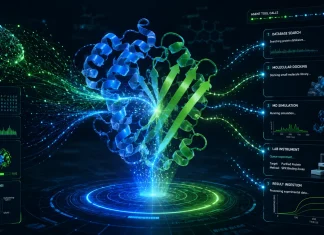
NVIDIA BioNeMo Agent Toolkit: Turning AI Agents into Biomolecular Scientists
NVIDIA launched the BioNeMo Agent Toolkit, a set of AI-ready tools that lets AI agents act like scientists by enabling them to choose models,...
Claude Science: Anthropic’s New AI Workbench Could Transform Biological Research
Artificial intelligence is rapidly becoming an indispensable research partner in the life sciences. But while many AI tools excel at writing code or summarizing...
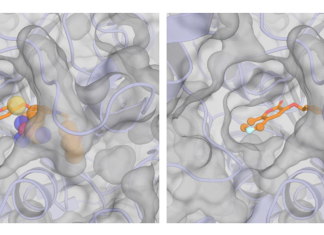
From Fragment to Drug Candidate: How Sesame Uses AI to Build...
There's a moment in drug discovery that every medicinal chemist knows well. You've found a hit, a molecule that binds to your target, shows...
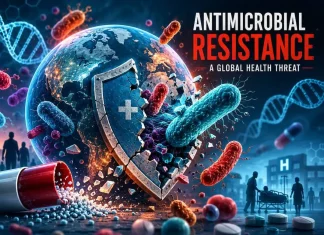
Can Machine Learning Forecast Antibiotic Resistance Trends Across the Globe?
Antimicrobial resistance (AMR) has quietly become one of the defining health crises of our time, undermining the effectiveness of life-saving medicines and putting decades...
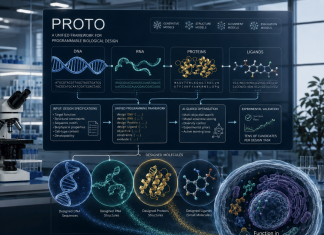
From Natural Language to Biological Design: How Proto Powers Generative Biology
A structured program produced genetic sequences that don't exist in nature — then those sequences were built, tested in human cells, and found to...
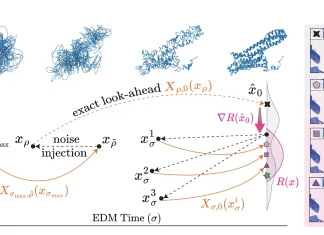
DECAF: Genesis AI-Based Framework for Faster and Computationally Efficient All-Atom Protein...
The high computational cost of generating accurate atomic-level biomolecular structures remains a major challenge in AI-driven drug discovery. Researchers from Genesis Molecular AI, MIT,...
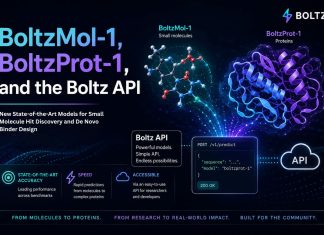
Boltz Launches BoltzMol-1, BoltzProt-1, and a New API for Small Molecule...
Drug discovery has always been brutally slow. You pick a target, screen hundreds of thousands of compounds, watch most of them fail, spend months...
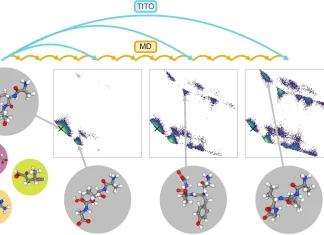
What If Molecular Simulations Could Run 10,000 Times Faster?
Conventional molecular dynamics (MD) simulations provide atomistic insights into molecular behavior but are fundamentally limited by their femtosecond time steps, making it computationally challenging...
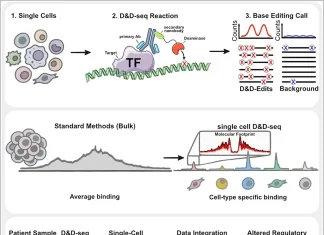
How D&D-seq Is Making Hard-to-Detect DNA-Protein Interactions Visible
If you've ever tried to figure out exactly where a transcription factor sits down on the genome inside a single cell, you know it's...

BioReason-Pro Allows Structured Reasoning for Protein Function Predictions
A team of scientists from the University Health Network - Canada's Hospital, Arc Institute and Vector Institute developed BioReason-Pro to tackle one of the...
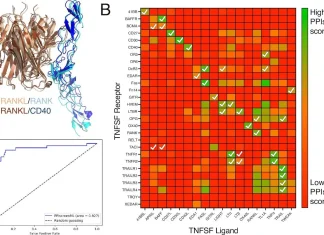
PPIscreenML: A Rigorous Machine Learning Approach to Screening Protein-Protein Interactions with...
Every second, thousands of proteins inside your cells are bumping into each other, forming fleeting partnerships, and splitting apart again. These protein-protein interactions (PPIs)...
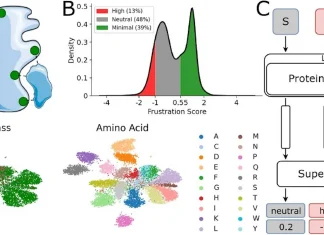
Meet FrustrAI-Seq: Proteome-Wide Frustration Profiling Without Structural Inputs
Proteins are remarkable molecules. They fold, bend, bind, and catalyze, all while balancing an internal tension that most biology textbooks barely mention. That tension...

Insilico Medicine’s PandaClaw: An Agentic AI for Therapeutic Discovery
For decades, the bottleneck in drug discovery wasn't the biology; it was the translation. Getting from a disease hypothesis to a viable therapeutic target...
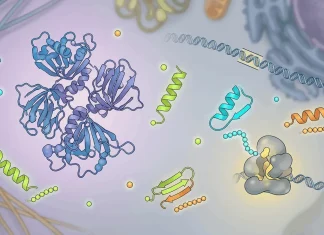
Beyond the Known Proteome: Microproteins and Peptideins Expand the Blueprint of...
Molecular biology is currently undergoing a taxonomic reckoning. For decades, the human genome was defined by a stable, canonical figure: roughly 19,500 to 20,000...
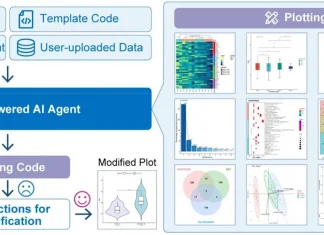
What If an AI Agent Could Handle All Your Bioinformatics Plots?...
The research team affiliated with Sun Yat Sen University in Guangzhou engineered PlotGDP, an AI-based web server tool designed to assist people with various...
How Biologists Can Design Proteins Without Programming Using OpenProtein.AI
OpenProtein.AI is an open-access platform founded by MIT alumni Tristan Bepler and Tim Lu, which provides open-source AI models and a no-code interface for...
Rentosertib and the Dawn of a New Era in AI-Driven Drug...
For years, the promise of artificial intelligence in drug discovery has lived mostly in press releases and conference decks. Researchers have talked about what...
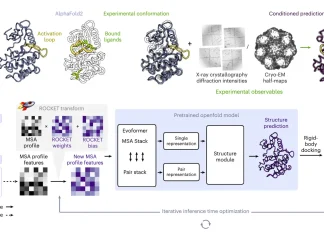
ROCKET Transforms AlphaFold2 into an Experiment-Driven Structure Modeling Tool
Researchers at the University of Cambridge, Columbia University, and partner institutions have introduced ROCKET, a novel framework that extends AlphaFold2 by integrating experimental data,...
Best Summer Internship in Bioinformatics 2026
@import url('https://fonts.googleapis.com/css2?family=Lora:ital,wght@0,400;0,600;1,400&family=DM+Sans:wght@300;400;500&display=swap');
*{margin:0;padding:0;box-sizing:border-box}
:root{
--navy:#042C53;
--blue:#185FA5;
--blue-mid:#378ADD;
--blue-light:#85B7EB;
--blue-pale:#E6F1FB;
--blue-border:rgba(24,95,165,0.15);
--gold:#BA7517;
--gold-light:#EF9F27;
--gold-pale:#FAEEDA;
--text:#042C53;
--muted:#0C447C;
...
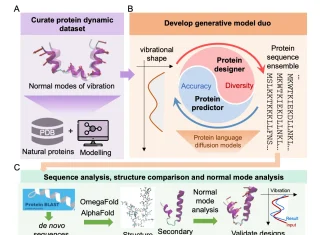
MIT Researchers Develop VibeGen: An AI Tool that Designs Novel Proteins...
Researchers at Mellon University and MIT introduce VibeGen, a generative AI framework for end-to-end de novo protein design conditioned on dynamics. The model generates...
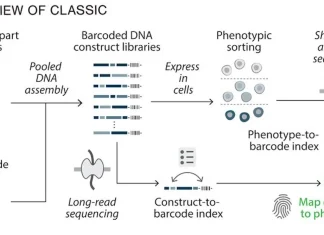
Scientists Introduce ‘CLASSIC’ Platform Enabling AI-Driven Genetic Circuit Design
Researchers from Rice and Boston universities developed CLASSIC, a platform that combines long- and short-read sequencing to measure over 100,000 multi-gene circuits in human...
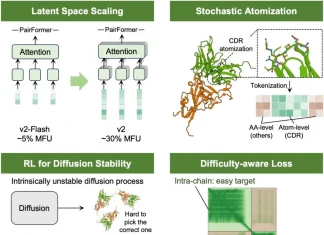
IntelliFold-2: An Open Source Alternative to AlphaFold 3 With Better Accuracy...
The innovators behind intelliFold-2 at IntelliGen AI emphasize that IntelliFold-2 is designed as a state-of-the-art open source alternative to AlphaFold3 with stronger performance in...
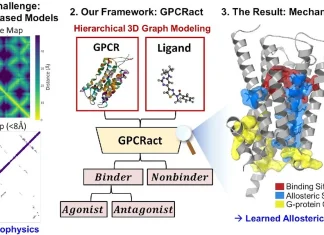
How AI Predicts Whether a Drug Actually Works—Not Just Fits
There is a question that has quietly haunted drug discovery for decades, one that sounds almost too basic to be a problem. A molecule...
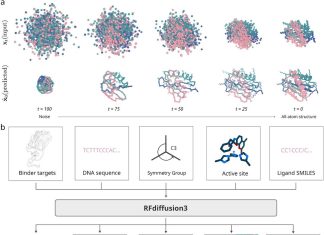
Transforming All-Atom De Novo Design of Protein Using RFdiffusion3
A major collaboration led by David Baker’s group at the Institute for Protein Design (UW) introduced RFdiffusion3 (RFD3), a next-generation version of the originally...
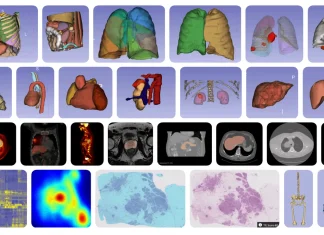
MHub.ai: Standardizing AI for Reproducible Medical Imaging
An inter-institutional collaboration across the US, Germany, and the Netherlands introduces MHub.ai, an accessibility and reproducibility-prioritizing, open source platform for standardized access to AI...

ConGLUDe: Toward General-Purpose Foundation Models for Drug Discovery
Researchers from Johannes Kepler University Linz, Austria, and Merck HealthCare, Germany, developed ConGLUDe (Contrastive Geometric Learning for Unified Computational Drug Design), an AI-based model for drug...
Claude Opus 4.5 and the Future of AI-Driven Research in Healthcare...
The growing complexity of biomedical research and healthcare demands AI systems that can go beyond general assistance to support end-to-end scientific workflows. Building on...
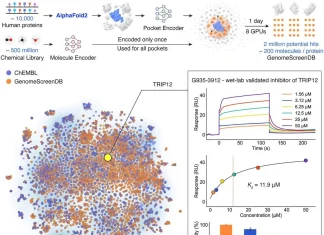
DrugCLIP Enables High-Throughput Virtual Screening Across the Human Proteome
Researchers at Tsinghua University have introduced DrugCLIP, a contrastive learning framework that enables ultrafast and accurate virtual screening at a genome-wide scale. Published in...
Beyond the Sequence: How FoldMason is Redefining Multiple Protein Structure Alignment...
The authors at Seoul National University developed FoldMason, a free, open-source, progressive Multiple Structural Alignment (MSTA) method published in Science that uses a structural...
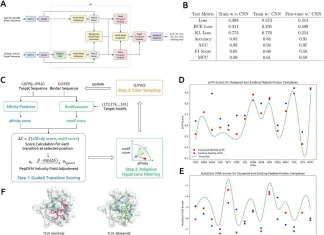
De Novo Peptide Binder Generation: How moPPIt Targets ‘Undruggable’ Proteins
Authors from the University of Pennsylvania and others innovated the motif-specific PPI targeting algorithm (moPPIt), a computational framework that integrates BindEvaluator along with Multi-Objective...
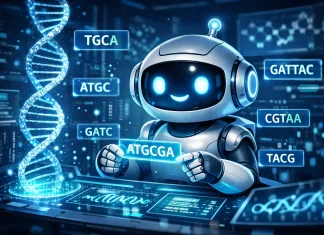
Generating DNA Sequences Using AI: DNA-Diffusion Promises Effective Gene Therapy
The researchers at Broad Institute and Mass General Brigham in Nature Genetics propose DNA-Diffusion, the first ever generative diffusion framework trained on DNA accessibility...
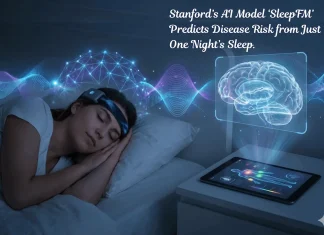
Stanford’s SleepFM AI Reads Disease Risk from a Single Night of...
Stanford Medicine and researchers in Denmark and Boston have built an AI foundation model, SleepFM, that can read a single night of lab‑recorded sleep...
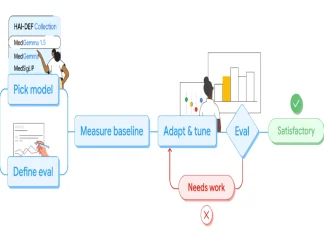
Google’s MedGemma 1.5 and MedASR: Transforming Medical Imaging and Speech Recognition...
Google’s Health AI-Developed Foundations (HAI-DEF) has released an updated version of MedGemma (v1.5), an open-source generative AI model with enhanced capabilities in medical imaging...
Must Read
Prompteina: Designing Proteins From Plain-English Descriptions
Researchers at the University of Washington, the Allen Institute for AI (Ai2), the National University of Singapore, and the Howard Hughes Medical Institute have...
SynthID Bio: Google DeepMind Brings Invisible Watermarks to AI-Designed Proteins
Google DeepMind's SynthID Bio, published in Nature, hides watermarks in AI-designed proteins while preserving binding. How it works and its limits.
TurbOmics: A Free, No-Code Web Platform That Puts Metabolomics at the Center of Multi-Omics...
TurbOmics, a free web platform from CNIC and EMBL, integrates metabolomics with proteomics and transcriptomics data, no coding needed.

Biohub, DOE, NIH and Tech Giants Commit $1.8 Billion to Build Open Data for...
Biohub, the U.S. DOE, NIH, Google DeepMind, Isomorphic Labs and Meta expand the Virtual Biology Initiative to about $1.8 billion, aiming to build open, AI-ready datasets for predictive models of human cells.

Nobel Prize 2026 in Medicine: How Optogenetics Lets Light Control the Brain
A light switch for the brain wins the Nobel
The 2026 Nobel Prize in Physiology or Medicine goes to Karl Deisseroth, Peter Hegemann, and Georg...