Half of Cancer Drug Targets Sit in Tumours the Drug Isn’t Approved For
A Cambridge study of 17,029 whole genomes finds 51% of immediately actionable cancer mutations sit in tumour types where the drug is not approved.

Plain-language summaries of new research papers in bioinformatics, computational biology and life sciences.

A Cambridge study of 17,029 whole genomes finds 51% of immediately actionable cancer mutations sit in tumour types where the drug is not approved.


UW’s Institute for Protein Design has released tmol, a GPU-native PyTorch rebuild of Rosetta’s energy function that runs up to 362x faster.

UC Berkeley’s GPN-Star uses whole-genome alignments and species trees to predict variant effects, outperforming larger DNA models on non-coding variants.

WashU-led team builds mouse pangenome graphs on a T2T backbone, covering Collaborative Cross founders, to reduce reference bias and boost variant calling.

For years, genomics has had a dirty little secret: even our best reference genomes have gaps. Now, a large international team of the National Human Genome Research Institute (NHGRI) at the NIH, along with the National Institute of Standards and Technology (NIST), has closed most of those gaps for good. Their new study introduces what…

Every winter, the influenza A virus infects millions of people. In a handful of cells, it manages to do something very hard for scientists to observe: it enters a human cell, releases its own genetic material, and starts rewiring almost everything around it. We have known for decades that this rewiring happens, but seeing exactly…

A team from the FutureHouse, University of Oxford and Fordham University published a paper in Nature describing something that sounds like science fiction but is very real lab work: an AI system that proposed, tested, and refined a new drug candidate for an eye disease almost entirely on its own. The system is called Robin,…

Biology today produces more data than anyone knows what to do with. Sequencers spit out genomes, single-cell experiments generate massive expression matrices, proteomics platforms churn out thousands of protein measurements, and yet, turning all of that into an actual understanding of what is happening inside a cell or a disease remains painfully slow. A team…

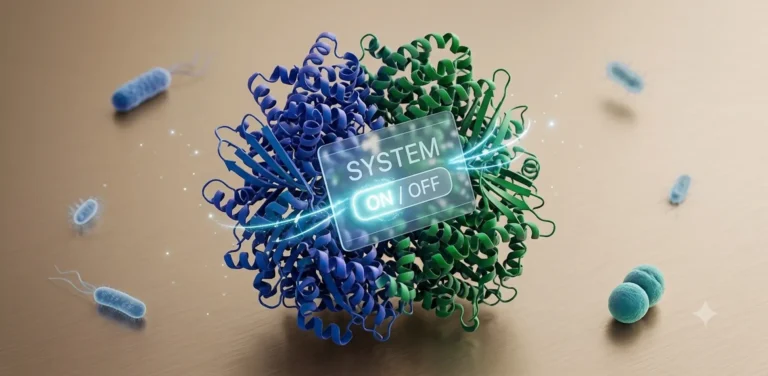
The interdisciplinary team, spanning researchers from the University of Surrey, Imperial College London, IISc, and others, discovered Virulence Associated Dikinase (VadK), which evolved from pyruvate phosphate dikinase to histidine kinase. It regulates the methylcitrate cycle used by Mycobacterium tuberculosis to process energy sources from host lipids. Without ΔvadK mutants, the TB bacteria failed to grow…

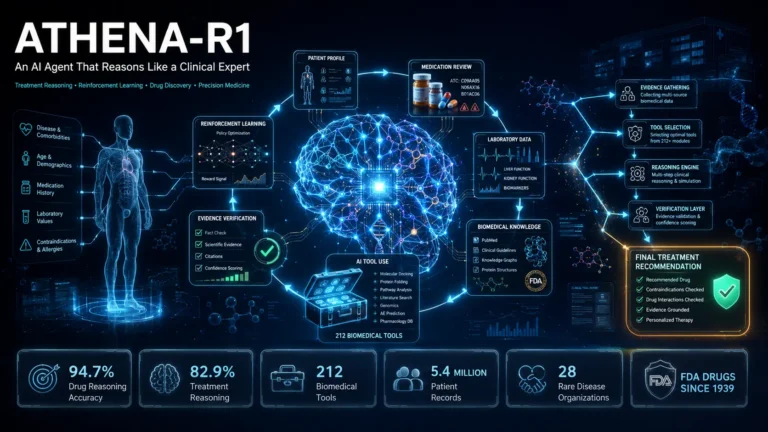
Picking the right treatment for a patient is rarely a one-step decision. A doctor has to think about the disease, the patient’s other health conditions, the drugs they’re already taking, possible interactions, and warnings that keep changing as new research comes out. It’s a slow, careful process of gathering facts before concluding. A team of…

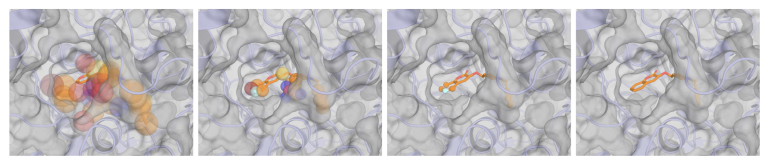
There’s a moment in drug discovery that every medicinal chemist knows well. You’ve found a hit, a molecule that binds to your target, shows early promise, but isn’t quite ready. It might be too big, too greasy, or just structurally awkward. So you strip it down. You keep the core that’s doing the good work,…

Antimicrobial resistance (AMR) has quietly become one of the defining health crises of our time, undermining the effectiveness of life-saving medicines and putting decades of medical progress at risk. Drug-resistant infections already claim more than 1 million lives each year and contribute to nearly 5 million deaths globally, with projections pointing to a staggering 39 million…

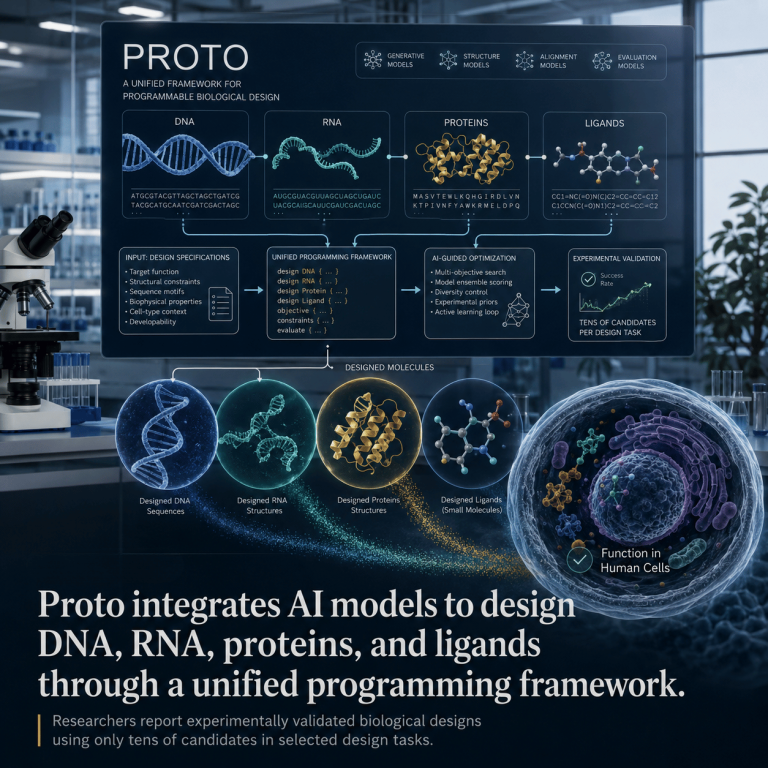
A structured program produced genetic sequences that don’t exist in nature — then those sequences were built, tested in human cells, and found to work. That single result points to something larger: biology is beginning to look less like a collection of disconnected experiments and more like a programmable system. Proto is the language making…

The high computational cost of generating accurate atomic-level biomolecular structures remains a major challenge in AI-driven drug discovery. Researchers from Genesis Molecular AI, MIT, Carnegie Mellon University, and Imperial College London have developed DeCAF (Denoiser Cofolding All-Atom Flowmap), a framework that distills diffusion-based cofolding models into faster flow-based models capable of generating high-quality protein and…

Every second, thousands of proteins inside your cells are bumping into each other, forming fleeting partnerships, and splitting apart again. These protein-protein interactions (PPIs) are the invisible handshakes that keep your heart beating, your immune system fighting, and your DNA replicating. Get them wrong, and disease follows. But here’s the problem: figuring out which proteins…

Proteins are remarkable molecules. They fold, bend, bind, and catalyze, all while balancing an internal tension that most biology textbooks barely mention. That tension has a name: local energetic frustration. And a new study from researchers at Helmholtz Munich, the Technical University of Munich, and the Barcelona Supercomputing Center has just made it dramatically easier…

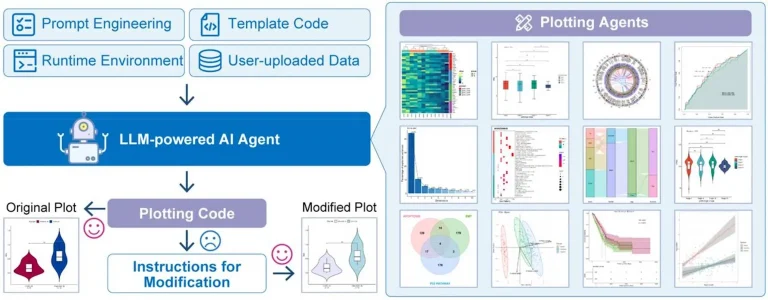
The research team affiliated with Sun Yat Sen University in Guangzhou engineered PlotGDP, an AI-based web server tool designed to assist people with various bioinformatics plotting tasks, with no coding or environment deployment required. Biomedical research catalyzes progress in medicine, diagnostics, and therapies. Thousands of papers are published on a daily basis across journals. Without…

Researchers at the University of Cambridge, Columbia University, and partner institutions have introduced ROCKET, a novel framework that extends AlphaFold2 by integrating experimental data, such as cryo-EM and x-ray crystallography, directly into structure prediction. It fuses machine learning priors with traditional approaches, allowing accurate modeling even at low resolution, noisy, or frontier datasets. Rocket was…

Researchers from Rice and Boston universities developed CLASSIC, a platform that combines long- and short-read sequencing to measure over 100,000 multi-gene circuits in human cells. The resulting data was used to train machine learning models to predict circuit behavior and uncover rules for part compositions, accelerating the design-build-test-learn cycle in synthetic biology. Limitations of the…

The innovators behind intelliFold-2 at IntelliGen AI emphasize that IntelliFold-2 is designed as a state-of-the-art open source alternative to AlphaFold3 with stronger performance in therapeutically relevant tasks like antibody-antigen docking and protein-ligand co-folding. The architectural refinements, like latent scaling and atom attention, along with algorithmic innovations such as policy-guided diffusion and difficulty-aware loss reweighting, help…

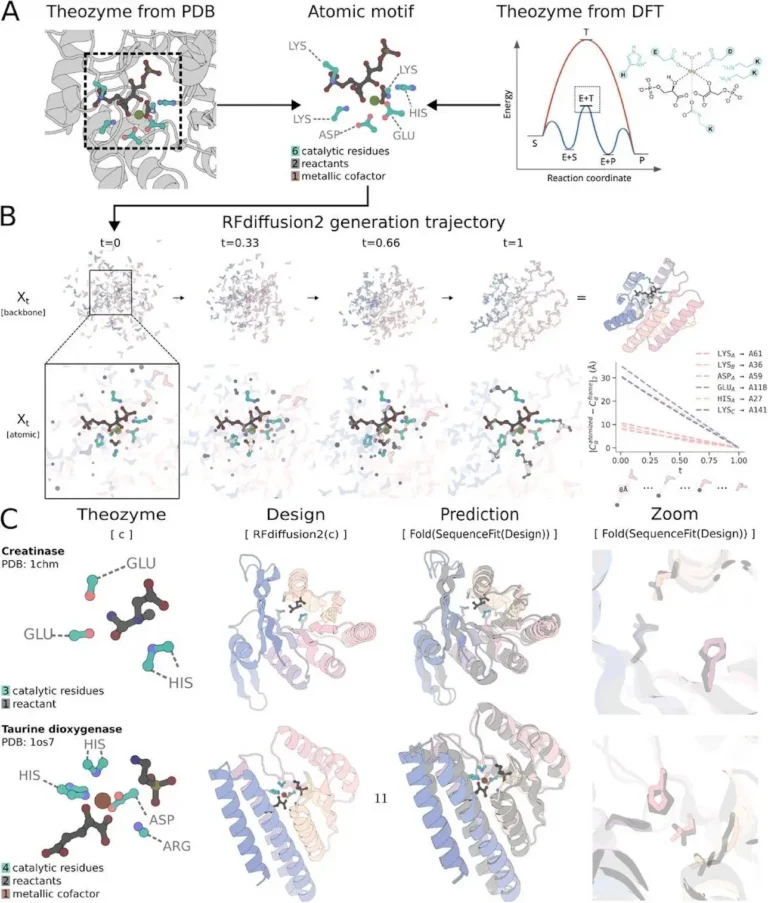
A major collaboration led by David Baker’s group at the Institute for Protein Design (UW) introduced RFdiffusion3 (RFD3), a next-generation version of the originally developed RFdiffusion. It is a generative diffusion model for general-purpose de novo protein design that works at the all-atom level, allowing precise modelling of hydrogen bonds, ligands, and nucleic acid interactions….

An inter-institutional collaboration across the US, Germany, and the Netherlands introduces MHub.ai, an accessibility and reproducibility-prioritizing, open source platform for standardized access to AI models for automating and accelerating research in medical imaging. AI as a Revolution in Medical Imaging and Issues with Its Usability Medical imaging has been a revolution in the medical field…

Researchers from Johannes Kepler University Linz, Austria, and Merck HealthCare, Germany, developed ConGLUDe (Contrastive Geometric Learning for Unified Computational Drug Design), an AI-based model for drug discovery. The model combines structure-based and ligand-based drug designs into one system instead of treating them separately. It can predict protein-ligand interactions, find binding pockets, and perform virtual screening even when…

Researchers at Tsinghua University have introduced DrugCLIP, a contrastive learning framework that enables ultrafast and accurate virtual screening at a genome-wide scale. Published in Science, it is validated against 5-HT2AR, TRIP12, and NET, and it enables virtual screening at the genome scale, up to seven orders of magnitude faster than docking methods. Why is there…

The authors at Seoul National University developed FoldMason, a free, open-source, progressive Multiple Structural Alignment (MSTA) method published in Science that uses a structural alphabet from Foldseek and aligns hundreds of thousands of protein structures. Achieving two orders of magnitude faster than other methods, when applied to Flaviviridae glycoproteins, it supported phylogenetic analysis below the…

Authors from the University of Pennsylvania and others innovated the motif-specific PPI targeting algorithm (moPPIt), a computational framework that integrates BindEvaluator along with Multi-Objective Guided Discrete Flow Matching (MOG-DFM) to design peptides that can selectively bind functional motifs without needing structural priors. It works directly from sequence data instead of requiring known 3D structures, making…

The researchers at Broad Institute and Mass General Brigham in Nature Genetics propose DNA-Diffusion, the first ever generative diffusion framework trained on DNA accessibility data to design cis-regulatory elements (CREs) with activity specific to cell-types. The authors validated these synthetic DNA elements using STARR-seq and EXTRA-seq (Endogenous expression Targeted Regulatory Activity sequencing) against blood cancer…

The study led by researchers from UC San Diego and UC Santa Cruz introduces PanMAN, a new data structure designed to overcome the limitations of current pangenome formats. Applied to SARS-CoV-2,PanMAN compressed the entire genome sequence into just 366 MB while still preserving all the variations. What is Pangenomics? Studying genomes helps us in understanding…

Scientists from MIT and Microsoft Research present CleaveNet, an AI-based pipeline that merges predictive and generative modeling for end-to-end peptide (short protein) design. By validating the system on matrix metalloproteinases (MMPs), the team demonstrates that AI can uncover novel cleavage motifs, engineer selective substrates, and overcome ever-existing challenges in protease promiscuity. Balancing Efficiency, Selectivity, and…

Researchers at the University of Pennsylvania developed PeptiVerse, a single platform that predicts drug-related properties of therapeutic peptides using either amino acid sequences or chemically modified SMILES representations. The platform uses pretrained protein and chemical language models to make quick and precise predictions for various peptide properties. With a web-based interface and an open-source implementation,…

An integrated atlas of the human 4D genome just dropped, and it is breathtaking in its ambition. In a massive consortium effort, researchers from various institutions, including UMass Chan Medical School, Northwestern University, and other collaborators, have assembled one of the most comprehensive views to date of how the human genome folds and functions in…

Researchers from Tsinghua University and Peking University in China developed the SMRTnet tool, which employs a deep-learning approach to identify interactions between small molecules and RNA, eliminating the need for RNA tertiary structure information. By combining RNA secondary structure and multimodal neural networks, the research showed that SMRTnet outperformed other prediction tools and validated its…

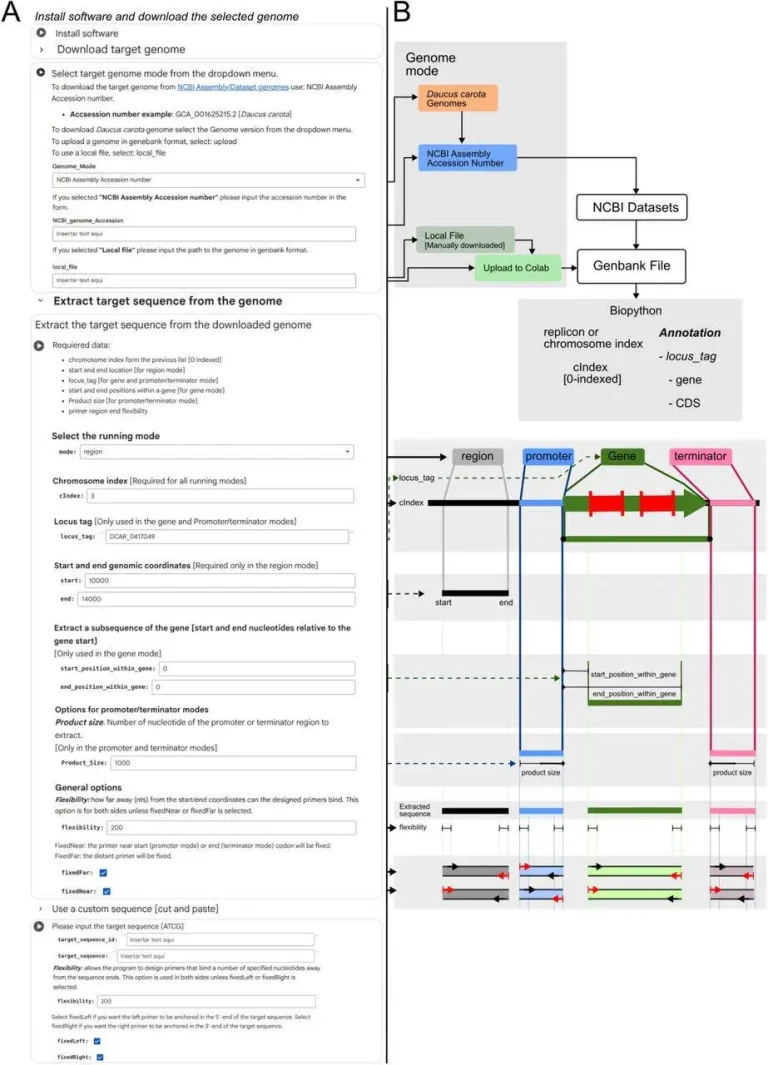
Researchers at IBBM (Instituto de Biotecnología y Biología Molecular) and NOVABIOMA Biomanufacturing FlexCo introduced ColabPCR, a Google Colab-based Python notebook created along with collaborators in Austria and Canada. It simplifies PCR primer design by combining Primer3 for primer selection, BLASTn for off-target detection, and restriction site insertion in a single platform. Validated on carrot genomes,…

Researchers at Mount Sinai Institute introduced Variant-to-Phenotype (V2P), a new machine learning framework that not only predicts whether a genetic variant is harmful but also reasons what kind of disease phenotype it leads to, making variant interpretation more precise and clinically useful. Explosion of Genetic Data and How it Transformed into Computational Approaches for Predicting…

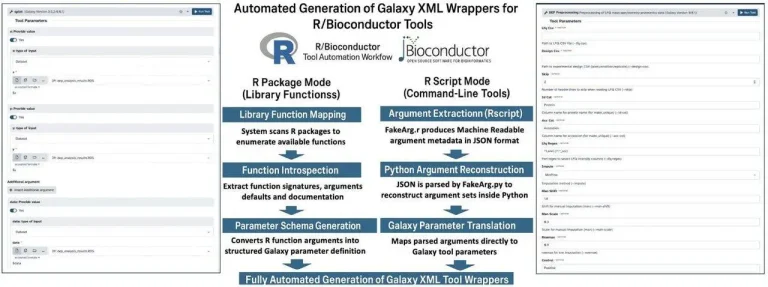
Researchers from the Center for Computational Life Sciences at the Cleveland Clinic introduce R2G2, a Python-R framework that automates the integration of R and Bioconductor tools into the Galaxy platform. As a bioinformatician who lives daily in RStudio, terminals, and Galaxy histories, this feels like someone just removed a chronic, low-grade headache from workflow development….

Researchers at MIT introduce an all-atom generative model, BoltzGen. The model incorporates a design specification language that allows researchers to control constraints like covalent bonds, binding sites, and structural motifs for designing proteins and peptides that can bind to diverse biomolecular targets. With strong structural reasoning and state-of-the-art folding performance, BoltzGen is experimentally validated across…

Scientists at UC Santa Cruz, Google, the National Institutes of Health, and partner institutes have developed DeepSomatic, a deep-learning tool that detects cancer-related DNA alterations (somatic variations) from both short-read and long-read sequencing. Unlike other tools, it can operate with whole-genome, exome, tumor-normal, tumor-only, and FFPE samples. The team generated and publicly released five matched…

Protein engineering is in the middle of a quiet revolution, and a new study from researchers at the School of Computational Science and Engineering, Georgia Institute of Technology, pushes that revolution a big step forward, introducing SPURS (stability prediction using a rewired strategy). Their work, published in Nature Communications, tackles a longstanding challenge in computational…

Genesis Molecular AI and NVIDIA have introduced PEARL (Placing Every Atom in the Right Location), a deep learning foundation model designed for large-scale protein–ligand cofolding in computational drug discovery. By leveraging synthetic training data, SO(3)-equivariant diffusion architectures, and controllable inference, PEARL achieves more accurate and physically valid binding pose predictions, outperforming AlphaFold 3 and other leading…

Next-generation sequencing has transformed gene expression profiling into a routine experiment, but interpreting those matrices remains a challenge for many labs. Researchers from Kyungpook National University, Republic of Korea, address this gap by developing an “agentic” AI system that can plan, execute, and interpret RNA-sequencing downstream analysis for researchers with limited biological backgrounds. As a…

Peptides, which are short chains of amino acids, have become increasingly important in the world of medicine and biotechnology. Their unique properties make them ideal candidates for applications ranging from hormone therapies to antimicrobial agents. However, designing new, functional peptides has always been a challenge, primarily because traditional machine learning models require enormous datasets, often…

A team of researchers from the University of Edinburgh and collaborators from institutions like Stanford and UC San Francisco have tackled a central question in biotechnology: can we make protein expression predictable and routine? Their review, published in Trends in Biotechnology, explores why expressing proteins in host organisms remains a challenge, what’s holding the field…

Imagine holding a book written in a language where only 2% of the pages contain clear instructions, while the remaining 98% seem like indecipherable code. This mirrors the challenge scientists face with the human genome, where protein-coding regions make up a tiny fraction while non-coding regions control life’s essential processes. For decades, interpreting these regulatory…

In modern biology, accurately simulating biomolecular interactions is a major difficulty. Our capacity to predict biomolecular complex structures has significantly improved with recent developments like AlphaFold3 and Boltz-1, yet these models are still unable to predict binding affinity, a crucial characteristic that underlies molecular function and therapeutic efficacy. Here, researchers from MIT introduce Boltz-2, a…

The requirement and utility of conventional force field-based folding simulations have been called into question by the overwhelming success of deep learning techniques in protein structure prediction. Researchers from the University of Michigan and the National University of Singapore presented a hybrid method called deep-learning-based iterative threading assembly refinement (D-I-TASSER), which combines iterative threading fragment…

Researchers from Changping Laboratory in Beijing introduced AF3Score, a novel adaptation of AlphaFold3 designed to evaluate biomolecular structures with unprecedented accuracy. This innovation addresses a critical gap in computational biology: the need for reliable, unbiased scoring methods to assess the quality of protein structures, complexes, and designed biomolecules. By reimagining AlphaFold3’s architecture, the team created…

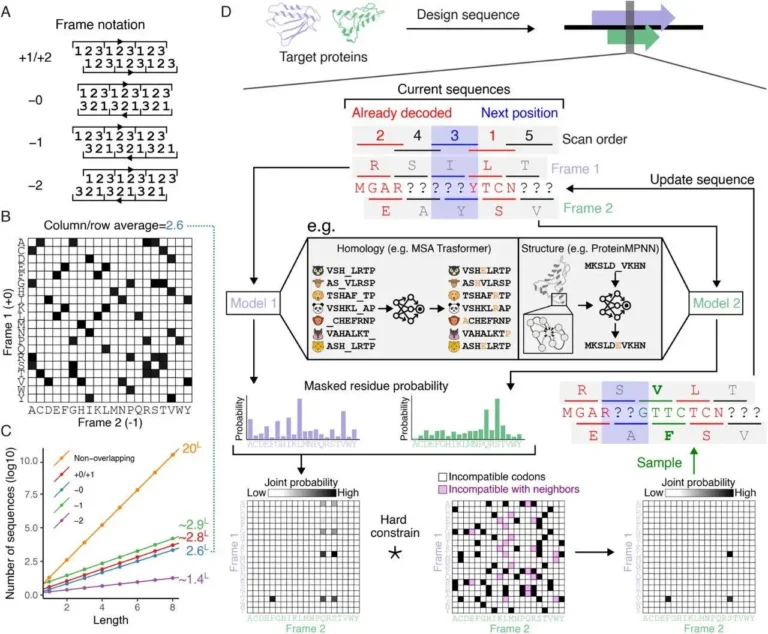
Given that the sharing of codon nucleotides dramatically reduces the size of protein sequences, viruses in nature often generate overlapping genes (OLG) in alternate reading frames of the same nucleotide sequence. The question of whether amino acid sequences are sufficiently degenerate with regard to protein folding to permit the extensive overlap of arbitrary pairs of…

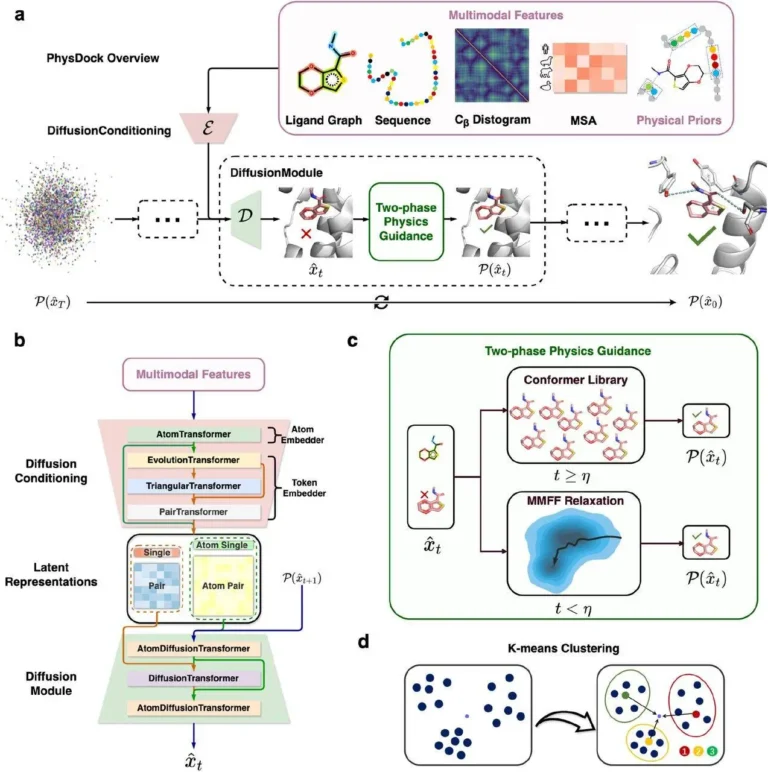
In a breakthrough that could transform drug discovery, a team of researchers from ShanghaiTech University has introduced PhysDock, a novel AI-powered model designed to predict how small molecules (ligands) bind to proteins with atomic-level precision. Protein-ligand docking plays a central role in structure-based drug design. It helps researchers understand how drugs interact with their biological…

In de novo enzyme design, the functional groups surrounding reaction transition states are described in the optimal active site. There are drawbacks to the generative AI technique RFdiffusion, which has been used to build highly active enzymes. The active site’s geometry can only be defined at the residue level, necessitating the construction of side chain…

The GPCR Dock competitions are a set of community-wide evaluations of ligand docking and computational structural modeling for G protein-coupled receptors, a key class of therapeutic targets in the human proteome. To shape and guide the development of computational modeling approaches for GPCRs, the assessments are intended to offer an objective summary of advancements and…
| Cookie | Duration | Description |
|---|---|---|
| cookielawinfo-checkbox-analytics | 11 months | This cookie is set by GDPR Cookie Consent plugin. The cookie is used to store the user consent for the cookies in the category "Analytics". |
| cookielawinfo-checkbox-functional | 11 months | The cookie is set by GDPR cookie consent to record the user consent for the cookies in the category "Functional". |
| cookielawinfo-checkbox-necessary | 11 months | This cookie is set by GDPR Cookie Consent plugin. The cookies is used to store the user consent for the cookies in the category "Necessary". |
| cookielawinfo-checkbox-others | 11 months | This cookie is set by GDPR Cookie Consent plugin. The cookie is used to store the user consent for the cookies in the category "Other. |
| cookielawinfo-checkbox-performance | 11 months | This cookie is set by GDPR Cookie Consent plugin. The cookie is used to store the user consent for the cookies in the category "Performance". |
| viewed_cookie_policy | 11 months | The cookie is set by the GDPR Cookie Consent plugin and is used to store whether or not user has consented to the use of cookies. It does not store any personal data. |