
Python for Bioinformatics: A 30-Day Roadmap with 10 Runnable Examples
Learn Python for bioinformatics in 30 days: a step-by-step roadmap and 10 tested Biopython examples, from FASTA files to BLAST results.
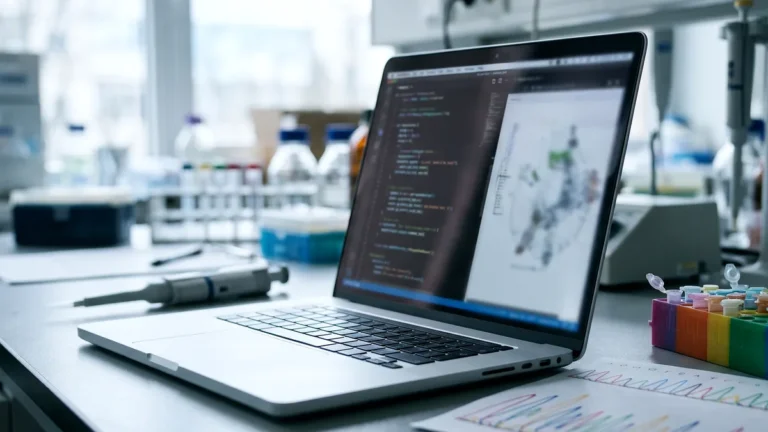
Learn Python for bioinformatics in 30 days: a step-by-step roadmap and 10 tested Biopython examples, from FASTA files to BLAST results.
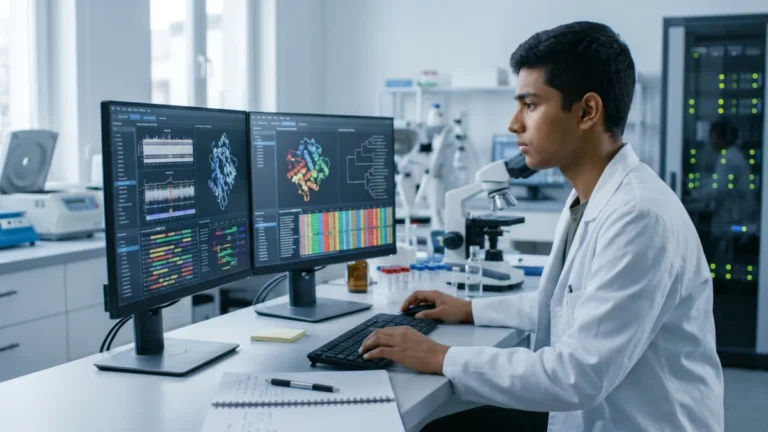
बायोइन्फॉर्मेटिक्स क्या है? सरल हिंदी में परिभाषा, उदाहरण, उपयोग, मुख्य टूल, पढ़ाई और करियर की पूरी जानकारी।
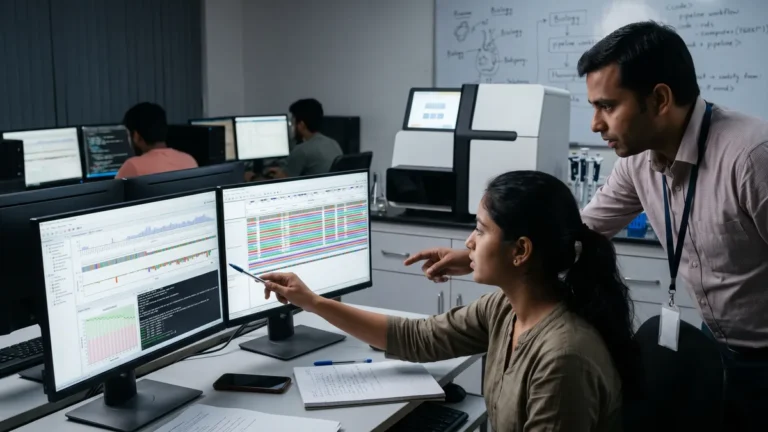
A beginner’s guide to NGS data analysis: the pipeline from FASTQ reads to annotated variants, the tools at each step, starter commands and free practice data.
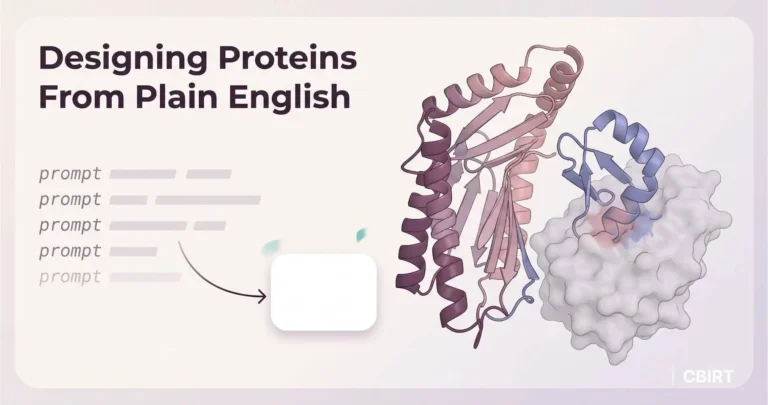
Researchers at the University of Washington, the Allen Institute for AI (Ai2), the National University of Singapore, and the Howard Hughes Medical Institute have developed Prompteina, an AI model that generates complete, all-atom protein structures from natural-language descriptions. Instead of setting up a separate technical input for every design goal, a scientist can simply describe…

A light switch for the brain wins the Nobel The 2026 Nobel Prize in Physiology or Medicine goes to Karl Deisseroth, Peter Hegemann, and Georg Nagel “for their discoveries concerning light-gated ion channels and optogenetics.” The Nobel Assembly at Karolinska Institutet announced the award on 5 October 2026, and the three laureates share the 12…

OpenAI has introduced Rosalind Workbench, a new research-preview environment available through the ChatGPT app that brings scientific tools, specialized biology models, and data workflows into a single connected space — letting researchers move from a biological question to inspectable evidence without losing the thread between disconnected tools. Scientific research rarely happens inside a single application….

For years, genomics has had a dirty little secret: even our best reference genomes have gaps. Now, a large international team of the National Human Genome Research Institute (NHGRI) at the NIH, along with the National Institute of Standards and Technology (NIST), has closed most of those gaps for good. Their new study introduces what…

Every winter, the influenza A virus infects millions of people. In a handful of cells, it manages to do something very hard for scientists to observe: it enters a human cell, releases its own genetic material, and starts rewiring almost everything around it. We have known for decades that this rewiring happens, but seeing exactly…

A team from the FutureHouse, University of Oxford and Fordham University published a paper in Nature describing something that sounds like science fiction but is very real lab work: an AI system that proposed, tested, and refined a new drug candidate for an eye disease almost entirely on its own. The system is called Robin,…

Biology today produces more data than anyone knows what to do with. Sequencers spit out genomes, single-cell experiments generate massive expression matrices, proteomics platforms churn out thousands of protein measurements, and yet, turning all of that into an actual understanding of what is happening inside a cell or a disease remains painfully slow. A team…
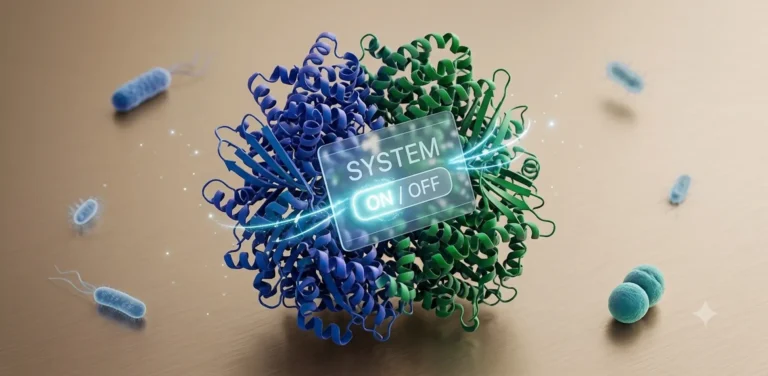
The interdisciplinary team, spanning researchers from the University of Surrey, Imperial College London, IISc, and others, discovered Virulence Associated Dikinase (VadK), which evolved from pyruvate phosphate dikinase to histidine kinase. It regulates the methylcitrate cycle used by Mycobacterium tuberculosis to process energy sources from host lipids. Without ΔvadK mutants, the TB bacteria failed to grow…
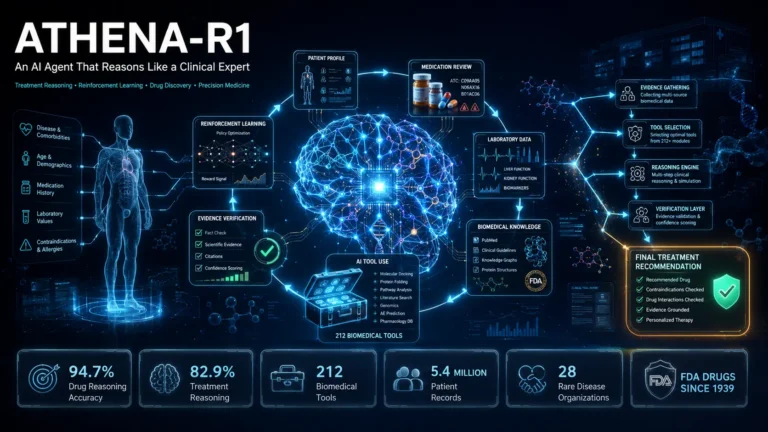
Picking the right treatment for a patient is rarely a one-step decision. A doctor has to think about the disease, the patient’s other health conditions, the drugs they’re already taking, possible interactions, and warnings that keep changing as new research comes out. It’s a slow, careful process of gathering facts before concluding. A team of…

Here’s an uncomfortable question for anyone building AI tools for genomics: can a model tell the difference between a real biological signal and a batch effect? Can it recognize when a QC flag should send it back to the drawing board? Most AI benchmarks test whether a model can execute a known analysis pipeline. Almost…

NVIDIA launched the BioNeMo Agent Toolkit, a set of AI-ready tools that lets AI agents act like scientists by enabling them to choose models, reason across workflows, and execute environments using BioNeMo Skills to run full scientific workflows in pharma, biotech startups, and labs. AI agents are becoming powerful research assistants in the life sciences,…

Artificial intelligence is rapidly becoming an indispensable research partner in the life sciences. But while many AI tools excel at writing code or summarizing papers, scientific discovery demands much more—it requires integrating literature, analyzing complex datasets, running computational workflows, and generating testable hypotheses. That’s where Claude Science enters the picture. Claude Science, which was recently…
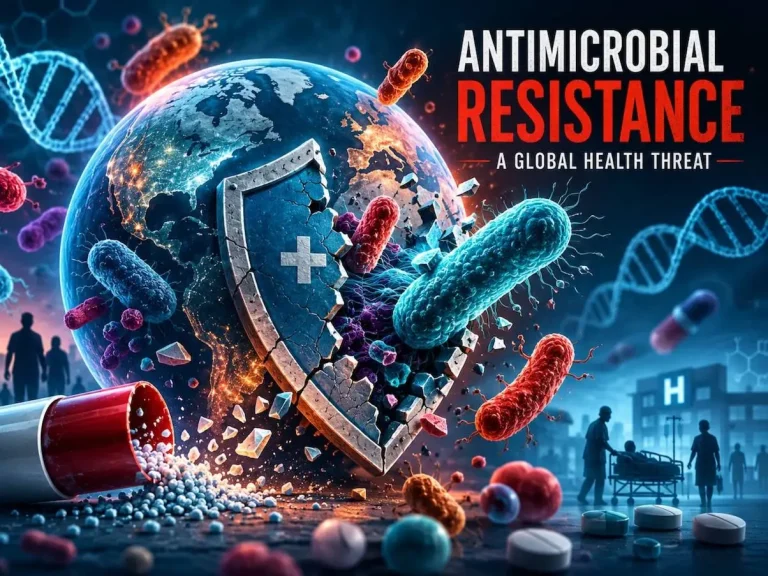
Antimicrobial resistance (AMR) has quietly become one of the defining health crises of our time, undermining the effectiveness of life-saving medicines and putting decades of medical progress at risk. Drug-resistant infections already claim more than 1 million lives each year and contribute to nearly 5 million deaths globally, with projections pointing to a staggering 39 million…
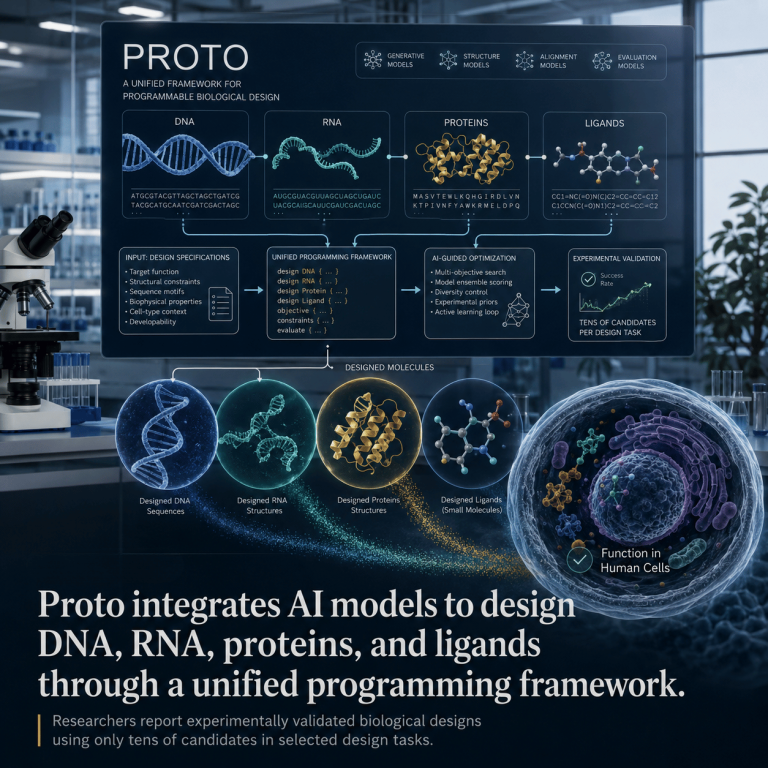
A structured program produced genetic sequences that don’t exist in nature — then those sequences were built, tested in human cells, and found to work. That single result points to something larger: biology is beginning to look less like a collection of disconnected experiments and more like a programmable system. Proto is the language making…

The high computational cost of generating accurate atomic-level biomolecular structures remains a major challenge in AI-driven drug discovery. Researchers from Genesis Molecular AI, MIT, Carnegie Mellon University, and Imperial College London have developed DeCAF (Denoiser Cofolding All-Atom Flowmap), a framework that distills diffusion-based cofolding models into faster flow-based models capable of generating high-quality protein and…

Drug discovery has always been brutally slow. You pick a target, screen hundreds of thousands of compounds, watch most of them fail, spend months on each experiment, and pray that something sticks. For most research teams, especially in academia, that process is simply out of reach. The cost alone can run into the tens of…

Conventional molecular dynamics (MD) simulations provide atomistic insights into molecular behavior but are fundamentally limited by their femtosecond time steps, making it computationally challenging to capture the slow conformational changes and relaxation processes that drive chemical and biological functions. Addressing this longstanding challenge, researchers at Chalmers University of Technology and the University of Gothenburg in Sweden have…

If you’ve ever tried to figure out exactly where a transcription factor sits down on the genome inside a single cell, you know it’s one of those problems that sounds simple but has quietly resisted easy solutions for years. A new paper out in Cell from a team of researchers at Weill Cornell Medicine and…
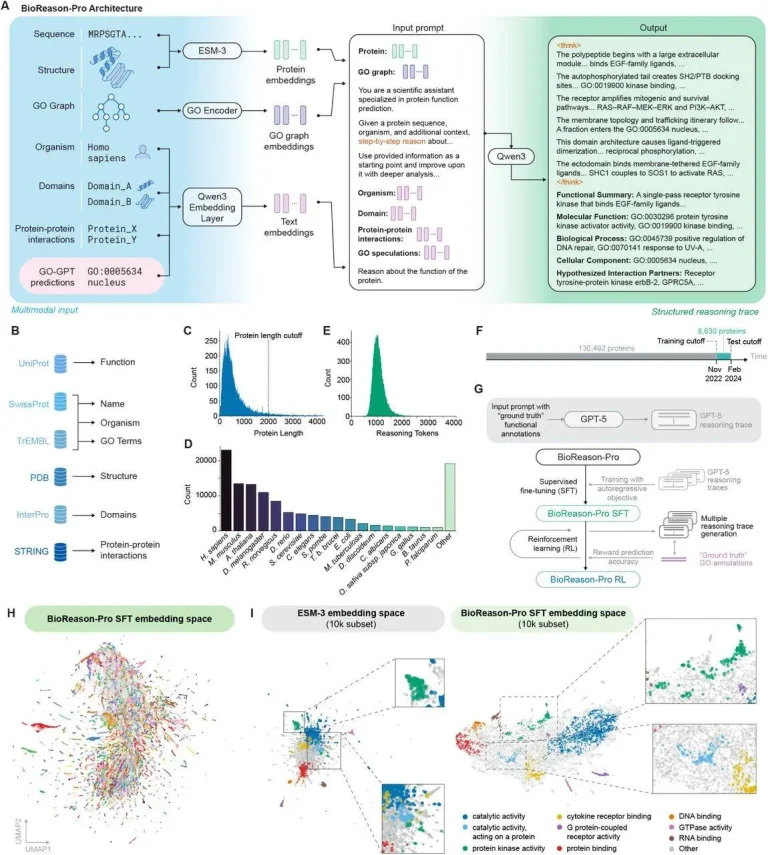
A team of scientists from the University Health Network – Canada’s Hospital, Arc Institute and Vector Institute developed BioReason-Pro to tackle one of the greatest challenges in biology: protein function prediction. Unlike existing AI tools, which give baffling black-box predictions, BioReason-Pro generates structured reasoning that explains why a protein is assigned a function. By integrating…

For decades, the bottleneck in drug discovery wasn’t the biology; it was the translation. Getting from a disease hypothesis to a viable therapeutic target required researchers to speak two languages fluently—the molecular grammar of living systems and the computational dialect of machine learning. Insilico Medicine is a clinical-stage AI-driven drug discovery company based in Hong…

Molecular biology is currently undergoing a taxonomic reckoning. For decades, the human genome was defined by a stable, canonical figure: roughly 19,500 to 20,000 protein-coding genes. These established sequences form the bedrock of drug development and clinical diagnostics. However, a major collaborative effort is now proving that this “canonical” view is merely the tip of…
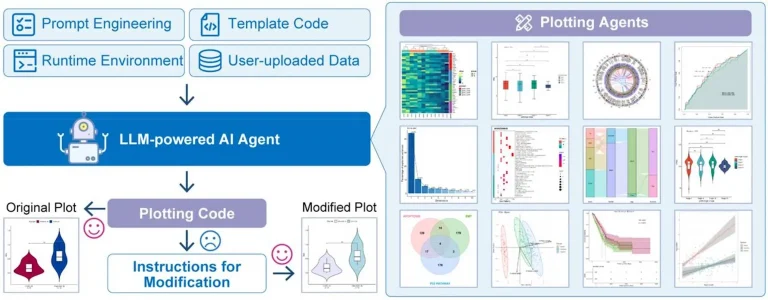
The research team affiliated with Sun Yat Sen University in Guangzhou engineered PlotGDP, an AI-based web server tool designed to assist people with various bioinformatics plotting tasks, with no coding or environment deployment required. Biomedical research catalyzes progress in medicine, diagnostics, and therapies. Thousands of papers are published on a daily basis across journals. Without…

OpenProtein.AI is an open-access platform founded by MIT alumni Tristan Bepler and Tim Lu, which provides open-source AI models and a no-code interface for protein engineering. With a motivation to democratize access to advanced protein language models like PoET and PoET-2, they aim to enable biologists without coding expertise to design and analyze proteins by…

Researchers at the University of Cambridge, Columbia University, and partner institutions have introduced ROCKET, a novel framework that extends AlphaFold2 by integrating experimental data, such as cryo-EM and x-ray crystallography, directly into structure prediction. It fuses machine learning priors with traditional approaches, allowing accurate modeling even at low resolution, noisy, or frontier datasets. Rocket was…

CBIRT Bioinformatics Summer Internship 2026 blog post blue theme Summer 2026 · CBIRT The Best Summer Internship in Bioinformatics —Dive Into Data This Summer May 4 – June 30, 2026 2-Month Program Online · Mon–Fri ISO 9001:2015 Certified Bioinformatics Machine Learning NGS Analysis Cancer Genomics Network Biology Proteomics Every summer presents a choice — rest,…

The innovators behind intelliFold-2 at IntelliGen AI emphasize that IntelliFold-2 is designed as a state-of-the-art open source alternative to AlphaFold3 with stronger performance in therapeutically relevant tasks like antibody-antigen docking and protein-ligand co-folding. The architectural refinements, like latent scaling and atom attention, along with algorithmic innovations such as policy-guided diffusion and difficulty-aware loss reweighting, help…
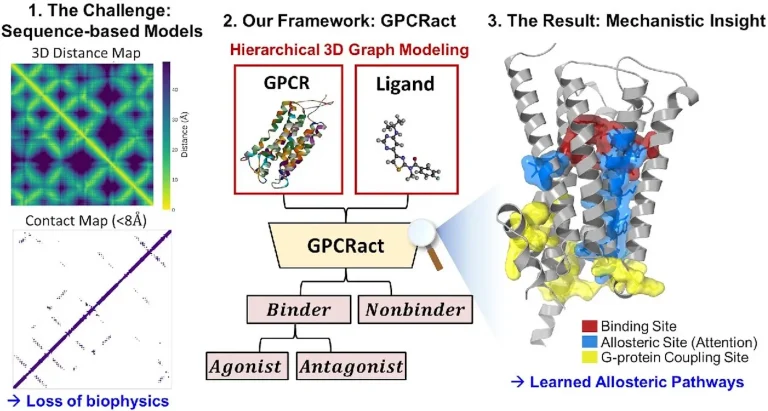
There is a question that has quietly haunted drug discovery for decades, one that sounds almost too basic to be a problem. A molecule finds its target protein. It docks in precisely. But then what? Does anything actually happen inside the cell? For a surprisingly long time, computational tools could answer the first part of…

An inter-institutional collaboration across the US, Germany, and the Netherlands introduces MHub.ai, an accessibility and reproducibility-prioritizing, open source platform for standardized access to AI models for automating and accelerating research in medical imaging. AI as a Revolution in Medical Imaging and Issues with Its Usability Medical imaging has been a revolution in the medical field…

Researchers from Johannes Kepler University Linz, Austria, and Merck HealthCare, Germany, developed ConGLUDe (Contrastive Geometric Learning for Unified Computational Drug Design), an AI-based model for drug discovery. The model combines structure-based and ligand-based drug designs into one system instead of treating them separately. It can predict protein-ligand interactions, find binding pockets, and perform virtual screening even when…

The growing complexity of biomedical research and healthcare demands AI systems that can go beyond general assistance to support end-to-end scientific workflows. Building on this need, Anthropic has expanded its Claude for Life Sciences initiative with the launch of Claude Opus 4.5, alongside new scientific and healthcare connectors and specialized agent capabilities. Designed with privacy-first,…

Researchers at Tsinghua University have introduced DrugCLIP, a contrastive learning framework that enables ultrafast and accurate virtual screening at a genome-wide scale. Published in Science, it is validated against 5-HT2AR, TRIP12, and NET, and it enables virtual screening at the genome scale, up to seven orders of magnitude faster than docking methods. Why is there…

The authors at Seoul National University developed FoldMason, a free, open-source, progressive Multiple Structural Alignment (MSTA) method published in Science that uses a structural alphabet from Foldseek and aligns hundreds of thousands of protein structures. Achieving two orders of magnitude faster than other methods, when applied to Flaviviridae glycoproteins, it supported phylogenetic analysis below the…

Authors from the University of Pennsylvania and others innovated the motif-specific PPI targeting algorithm (moPPIt), a computational framework that integrates BindEvaluator along with Multi-Objective Guided Discrete Flow Matching (MOG-DFM) to design peptides that can selectively bind functional motifs without needing structural priors. It works directly from sequence data instead of requiring known 3D structures, making…
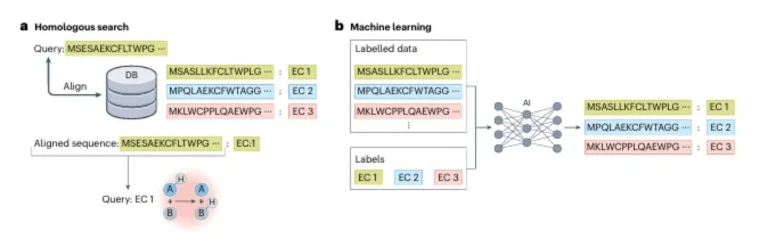
KAIST and UCSD researchers proposed AI-driven strategies for microbial gene function discovery, addressing the long-standing bottleneck where many microbial genes remain uncharacterized despite advances in genome sequencing. It systematically analyzes computational biology approaches, from traditional sequencing to cutting-edge deep learning methods. The Ongoing Challenge of Understanding Microbial Gene Functions Since the early 2000s, whole genome…

Researchers from Tsinghua University and Peking University in China developed the SMRTnet tool, which employs a deep-learning approach to identify interactions between small molecules and RNA, eliminating the need for RNA tertiary structure information. By combining RNA secondary structure and multimodal neural networks, the research showed that SMRTnet outperformed other prediction tools and validated its…
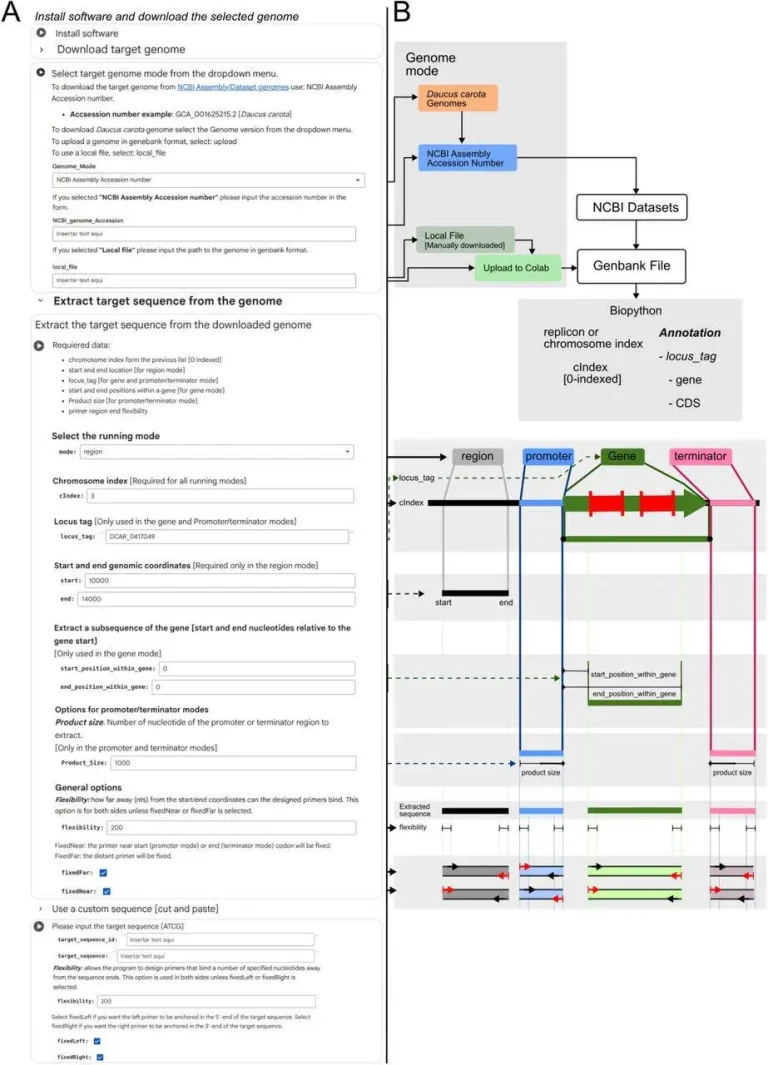
Researchers at IBBM (Instituto de Biotecnología y Biología Molecular) and NOVABIOMA Biomanufacturing FlexCo introduced ColabPCR, a Google Colab-based Python notebook created along with collaborators in Austria and Canada. It simplifies PCR primer design by combining Primer3 for primer selection, BLASTn for off-target detection, and restriction site insertion in a single platform. Validated on carrot genomes,…
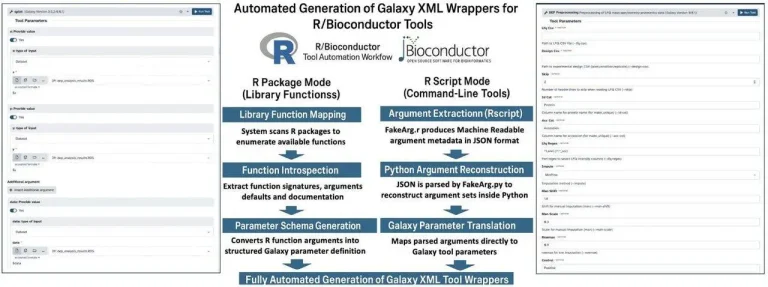
Researchers from the Center for Computational Life Sciences at the Cleveland Clinic introduce R2G2, a Python-R framework that automates the integration of R and Bioconductor tools into the Galaxy platform. As a bioinformatician who lives daily in RStudio, terminals, and Galaxy histories, this feels like someone just removed a chronic, low-grade headache from workflow development….

Researchers from École Polytechnique Fédérale de Lausanne (EPFL) and the National Centre of Competence in Research (NCCR) Catalysis, Switzerland, introduced DynaMate, an autonomous AI system that can fully set up, run, and analyze molecular dynamics simulations for proteins and protein-ligand complexes. DynaMate employs a multi-agent large language model architecture to plan simulation workflows, prepare molecular systems, and…

Next-generation sequencing has transformed gene expression profiling into a routine experiment, but interpreting those matrices remains a challenge for many labs. Researchers from Kyungpook National University, Republic of Korea, address this gap by developing an “agentic” AI system that can plan, execute, and interpret RNA-sequencing downstream analysis for researchers with limited biological backgrounds. As a…

When researchers at the Department of Biology and Biotechnology, the University of Pavia, set out to rethink bioinformatics teaching. They started from a simple observation: students are getting very good at running tools, but not necessarily at telling the biological story behind the output. Their new pipeline, “Eduomics”, is an attempt to fix exactly that…
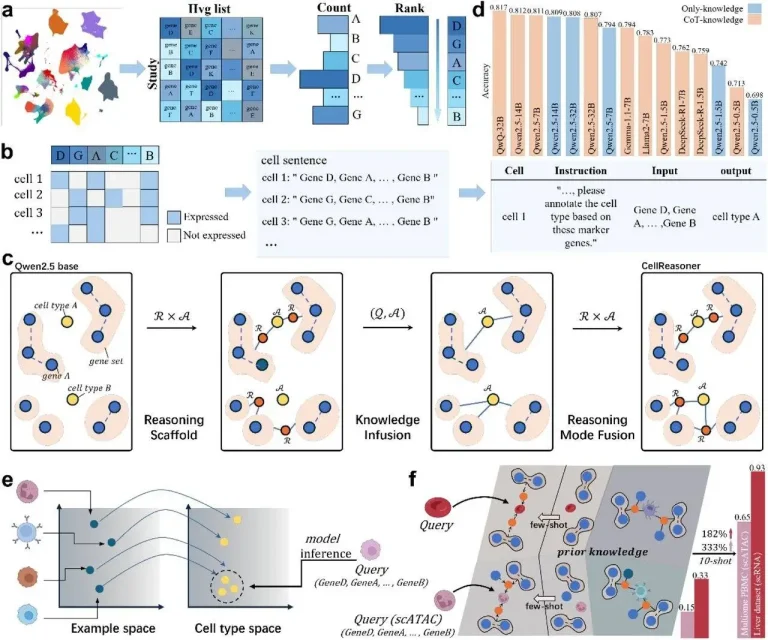
In the rapidly evolving field of single-cell biology, accurately identifying cell types from complex datasets remains a cornerstone of research. A team of scientists from Nanjing University, Inner Mongolia Minzu University, and Zhejiang University in China has developed CellReasoner, a groundbreaking artificial intelligence tool designed to streamline this process. This work introduces a lightweight, open-source…

A team of researchers from the University of Edinburgh and collaborators from institutions like Stanford and UC San Francisco have tackled a central question in biotechnology: can we make protein expression predictable and routine? Their review, published in Trends in Biotechnology, explores why expressing proteins in host organisms remains a challenge, what’s holding the field…
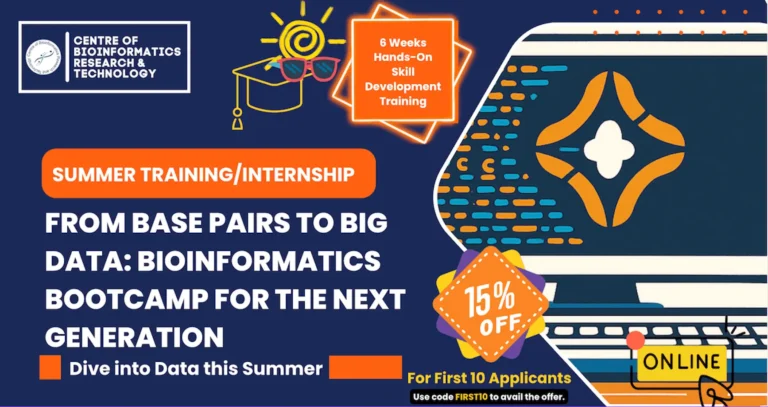
Are you ready to transform your understanding of bioinformatics and gain hands-on experience with cutting-edge tools and technologies? The Centre of Bioinformatics Research & Technology (CBIRT) is thrilled to announce its Summer Training/Internship Program—From Base Pairs to Big Data: Bioinformatics Bootcamp for the Next Generation. This intensive 1.5-month program (15 May to 30 June 2025) is designed to equip students…

The GPCR Dock competitions are a set of community-wide evaluations of ligand docking and computational structural modeling for G protein-coupled receptors, a key class of therapeutic targets in the human proteome. To shape and guide the development of computational modeling approaches for GPCRs, the assessments are intended to offer an objective summary of advancements and…
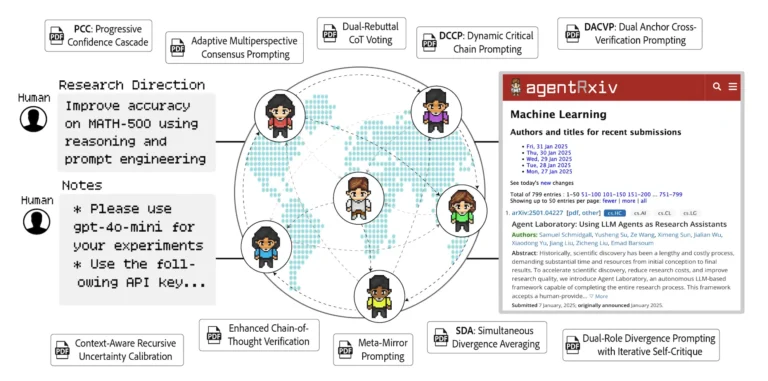
Hundreds of scientists come together through collaborative efforts to accomplish a shared goal during scientific discovery processes. Current workflows generate research independently, yet they cannot continually enhance previous discoveries because researchers work separately from one another. AgentRxiv, introduced by researchers from Johns Hopkins University and ETH Zurich, presents a system that solves these challenges by…

Researchers from the Broad Institute of MIT and Harvard, Harvard University, Carnegie Mellon University, and Howard Hughes Medical Institute, the study introduces Lyra—a groundbreaking deep-learning model designed for efficient biological sequence modeling. The Need for Efficient Biological Sequence Modeling Understanding the intricate relationships between DNA, RNA, and protein sequences is at the heart of modern…

One of the most significant challenges in computational and experimental biology is creating RNA molecules that interact with particular proteins. The practical use of current computational methods is limited by their requirement for a significant number of empirically confirmed RNA sequences for every individual protein or a thorough understanding of RNA structure. Researchers have developed…
| Cookie | Duration | Description |
|---|---|---|
| cookielawinfo-checkbox-analytics | 11 months | This cookie is set by GDPR Cookie Consent plugin. The cookie is used to store the user consent for the cookies in the category "Analytics". |
| cookielawinfo-checkbox-functional | 11 months | The cookie is set by GDPR cookie consent to record the user consent for the cookies in the category "Functional". |
| cookielawinfo-checkbox-necessary | 11 months | This cookie is set by GDPR Cookie Consent plugin. The cookies is used to store the user consent for the cookies in the category "Necessary". |
| cookielawinfo-checkbox-others | 11 months | This cookie is set by GDPR Cookie Consent plugin. The cookie is used to store the user consent for the cookies in the category "Other. |
| cookielawinfo-checkbox-performance | 11 months | This cookie is set by GDPR Cookie Consent plugin. The cookie is used to store the user consent for the cookies in the category "Performance". |
| viewed_cookie_policy | 11 months | The cookie is set by the GDPR Cookie Consent plugin and is used to store whether or not user has consented to the use of cookies. It does not store any personal data. |