A light switch for the brain wins the Nobel
The 2026 Nobel Prize in Physiology or Medicine goes to Karl Deisseroth, Peter Hegemann, and Georg Nagel “for their discoveries concerning light-gated ion channels and optogenetics.” The Nobel Assembly at Karolinska Institutet announced the award on 5 October 2026, and the three laureates share the 12 million Swedish kronor prize equally.
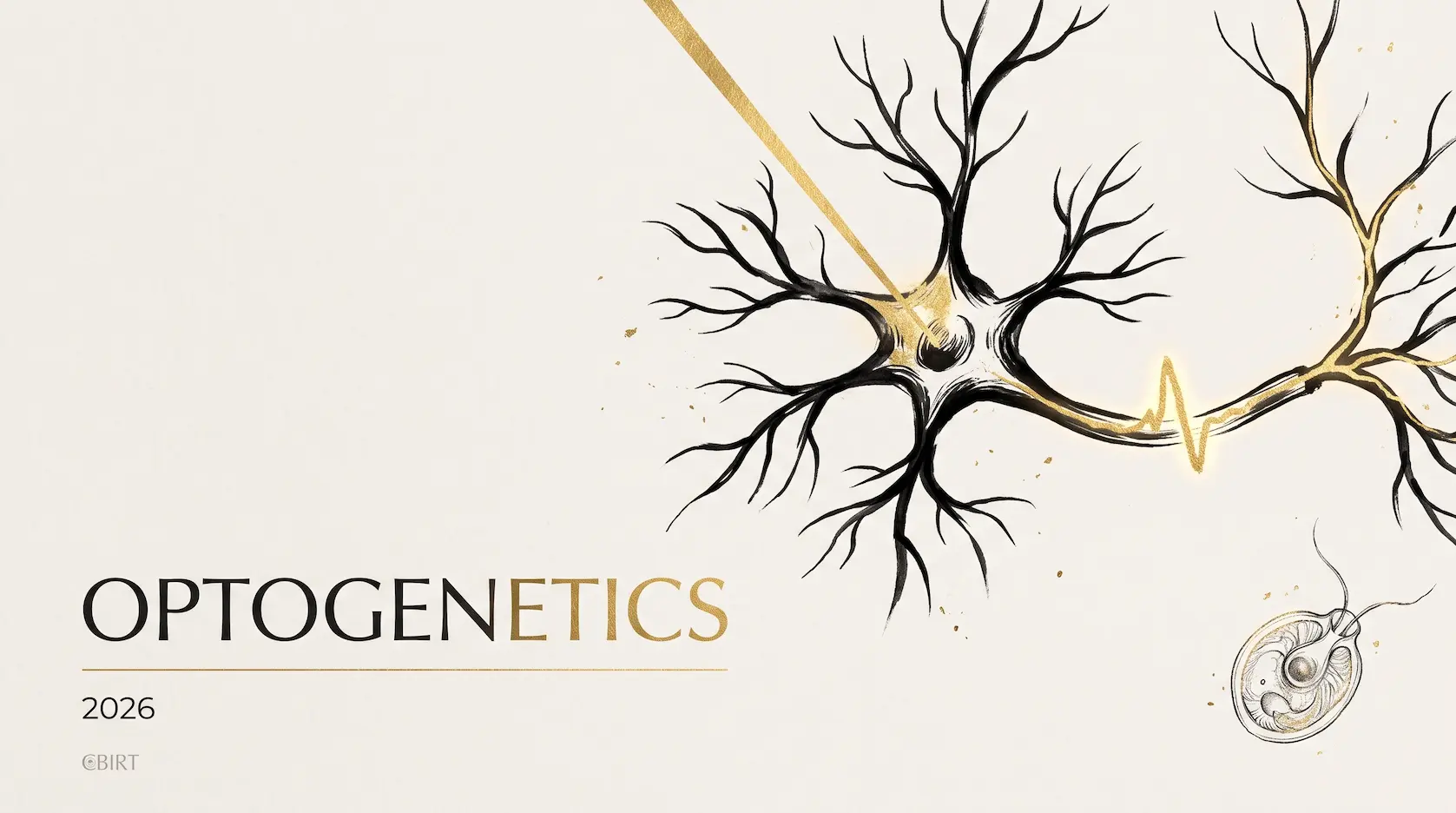
Optogenetics is the use of light to activate or deactivate the nerve cells within the living brain, allowing scientists to investigate how certain nerve cells influence memory, emotion, and behavior. According to the Nobel committee, the laureates have established the basis of a new era of neuroscience.
From swimming algae to a neural switch
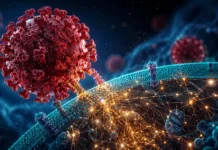
The story starts with Hegemann’s fascination with how a single-celled organism, Chlamydomonas, is able to swim towards the light. The cell membrane has channelrhodopsin that, on exposure to blue light, opens up a channel and charged ions enter the cell, thus creating an electric impulse.
The discovery unfolded in three steps:
- Discovering channelrhodopsin (early 2000s). Hegemann and Nagel found the protein and showed that any cell they put it in became light-sensitive. Two forms emerged: Hegemann’s group first described channelrhodopsin-1, then a team led by Nagel showed channelrhodopsin-2 opens in blue light.
- Into nerve cells (2005). Deisseroth inserted the channelrhodopsin gene into rat nerve cells. Flashes of blue light then triggered nerve signals, a result published in 2005.
- Into living brains (2007). Two years later, Deisseroth made the light switch work in the brains of living mice.
The idea itself was older. Francis Crick had speculated that light might be the ideal signal for turning one type of neuron on and off without touching its neighbors.
Why it matters
Before optogenetics, researchers could link brain areas to functions, but could not prove cause and effect. The Nobel committee compares that picture of the brain to a rough sketch map full of unknowns. Optogenetics lets scientists switch a defined group of cells on or off and see what changes.
Researchers have used it to trace the neural circuits behind specific memories, feelings, and behaviors linked to neurological and psychiatric disorders. Examples include showing that orexin neurons in the hypothalamus drive the switch from sleep to wakefulness, and locating memory engrams, the cell groups that store a given memory.
The method is also reaching the clinic, where researchers are trying to use it to restore sight in people with visual impairment. In mouse models of retinitis pigmentosa, delivering channelrhodopsin-2 to surviving retinal cells with an AAV vector restored light responses that reached the visual cortex.
A lesson for the computational biologist is that a discovery made in a relatively unexplored species has the potential to become a universally accepted approach. Optogenetic experiments now generate large amounts of neural recordings and imaging data, and interpreting these relies on good data analysis and modeling abilities.
The laureates
| Laureate | Born | Institution | Key contribution |
|---|---|---|---|
| Karl Deisseroth | 1971 | Howard Hughes Medical Institute and Stanford University, USA; Professor of Bioengineering and of Psychiatry and Behavioral Sciences | Turned channelrhodopsin into a light switch for nerve cells, first in rat neurons, then in living mice |
| Peter Hegemann | 1954 | Humboldt University of Berlin, Germany; prize-winning work done at the Max Planck Institute for Biochemistry, Martinsried | Co-discovered channelrhodopsin in Chlamydomonas |
| Georg Nagel | 1953 | University of Würzburg, Germany (Molecular Plant Physiology); prize-winning work done at the Max Planck Institute for Biophysics, Frankfurt | Co-discovered channelrhodopsin and its light-gated channel function |
The takeaway
The light-sensing algae protein was transformed into a light switch for nerve cells in the brain. The 2026 award goes to curiosity-driven basic science, which, after 20 years, is revolutionizing the way we understand memory, sleep, behavior, and illness.
Sources:
Press release: The Nobel Prize in Physiology or Medicine 2026, Nobel Assembly at Karolinska Institutet, 5 October 2026 (main source)
2026 Nobel Prize for Physiology or Medicine Goes to Optogenetics, GEN, 5 October 2026 (ChR1/ChR2 detail, Crick, research and retinal examples)
Millisecond-timescale, genetically targeted optical control of neural activity, Nature Neuroscience, 2005
Disclaimer:
This article is published by CBIRT for educational purposes, based on the official Nobel press release and other cited sources as of 6 October 2026. CBIRT is not affiliated with or endorsed by the Nobel Foundation (Nobel Prize® is its registered trademark), and this content is not medical advice. Spotted an error? Write to info@cbirt.net.
Follow Us!
Learn More:




Dr. Tamanna Anwar is a Scientist and Co-founder of the Centre of Bioinformatics Research and Technology (CBIRT). She is a passionate bioinformatics scientist and a visionary entrepreneur. Dr. Tamanna has worked as a Young Scientist at Jawaharlal Nehru University, New Delhi. She has also worked as a Postdoctoral Fellow at the University of Saskatchewan, Canada. She has several scientific research publications in high-impact research journals. Her latest endeavor is the development of a platform that acts as a one-stop solution for all bioinformatics related information as well as developing a bioinformatics news portal to report cutting-edge bioinformatics breakthroughs.