
Home Blog

ChatGPT Empowers Clinical Decision Making with Impressive Accuracy
The large-language model (LLM)-based model, ChatGPT, had its clinical decision-making abilities put to the test in a joint study by researchers from Harvard Medical...
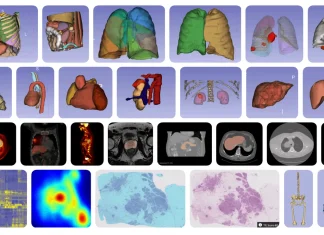
MHub.ai: Standardizing AI for Reproducible Medical Imaging
An inter-institutional collaboration across the US, Germany, and the Netherlands introduces MHub.ai, an accessibility and reproducibility-prioritizing, open source platform for standardized access to AI...

ConGLUDe: Toward General-Purpose Foundation Models for Drug Discovery
Researchers from Johannes Kepler University Linz, Austria, and Merck HealthCare, Germany, developed ConGLUDe (Contrastive Geometric Learning for Unified Computational Drug Design), an AI-based model for drug...

Claude Opus 4.5 and the Future of AI-Driven Research in Healthcare...
The growing complexity of biomedical research and healthcare demands AI systems that can go beyond general assistance to support end-to-end scientific workflows. Building on...
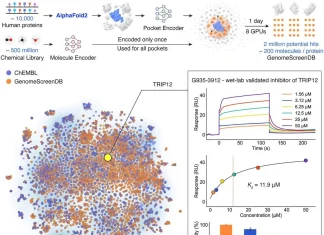
DrugCLIP Enables High-Throughput Virtual Screening Across the Human Proteome
Researchers at Tsinghua University have introduced DrugCLIP, a contrastive learning framework that enables ultrafast and accurate virtual screening at a genome-wide scale. Published in...

Beyond the Sequence: How FoldMason is Redefining Multiple Protein Structure Alignment...
The authors at Seoul National University developed FoldMason, a free, open-source, progressive Multiple Structural Alignment (MSTA) method published in Science that uses a structural...
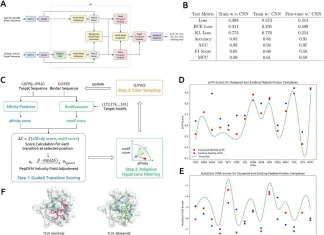
De Novo Peptide Binder Generation: How moPPIt Targets ‘Undruggable’ Proteins
Authors from the University of Pennsylvania and others innovated the motif-specific PPI targeting algorithm (moPPIt), a computational framework that integrates BindEvaluator along with Multi-Objective...
Generating DNA Sequences Using AI: DNA-Diffusion Promises Effective Gene Therapy
The researchers at Broad Institute and Mass General Brigham in Nature Genetics propose DNA-Diffusion, the first ever generative diffusion framework trained on DNA accessibility...

Stanford’s SleepFM AI Reads Disease Risk from a Single Night of...
Stanford Medicine and researchers in Denmark and Boston have built an AI foundation model, SleepFM, that can read a single night of lab‑recorded sleep...
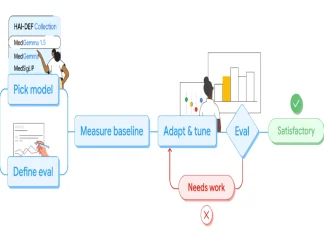
Google’s MedGemma 1.5 and MedASR: Transforming Medical Imaging and Speech Recognition...
Google’s Health AI-Developed Foundations (HAI-DEF) has released an updated version of MedGemma (v1.5), an open-source generative AI model with enhanced capabilities in medical imaging...
PanMAN Enables Scalable High-Resolution Pangenome Analysis
The study led by researchers from UC San Diego and UC Santa Cruz introduces PanMAN, a new data structure designed to overcome the limitations...
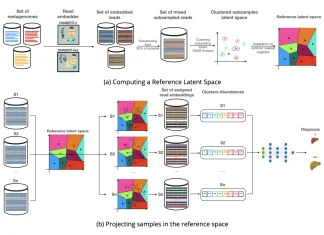
AI-Powered Metagenomics: How MetagenBERT Predicts Disease From Raw DNA Sequences
Researchers from Sorbonne University and Dauphine University, France, introduced MetagenBERT, a Transformer-based framework for disease prediction directly from raw metagenomic DNA without relying on...
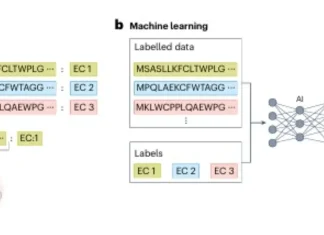
Solving a Long-Standing Genomics Bottleneck: KAIST Proposes AI-Powered Strategy for Gene...
KAIST and UCSD researchers proposed AI-driven strategies for microbial gene function discovery, addressing the long-standing bottleneck where many microbial genes remain uncharacterized despite advances...
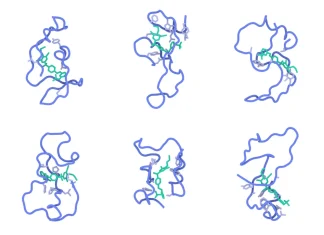
ToposBio Unveils Topos-1: An All-Atom Foundation Model for Intrinsically Disordered Proteins
Intrinsically disordered proteins (IDPs) are proteins that are central to neurodegenerative diseases and aggressive cancers like prostate cancer, have been considered ‘undruggable’ as structures...
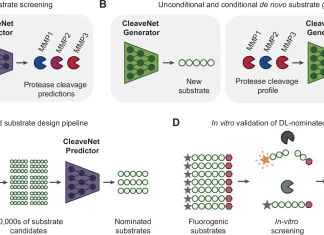
CleaveNet Enables Scalable and Targeted Protease Substrate Design for Diagnostics and...
Scientists from MIT and Microsoft Research present CleaveNet, an AI-based pipeline that merges predictive and generative modeling for end-to-end peptide (short protein) design. By...
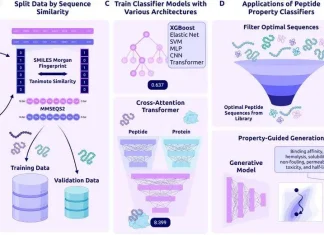
Advancing Peptide Therapeutics with PeptiVerse’s Unified Prediction Framework
Researchers at the University of Pennsylvania developed PeptiVerse, a single platform that predicts drug-related properties of therapeutic peptides using either amino acid sequences or...
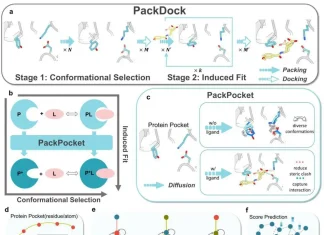
Redefining SBDD: PackDock Speeds Up Accurate Protein-Ligand Docking with Diffusion Models
Researchers from the University of Shanghai, China, created PackDock, a diffusion-based side-chain packing model that predicts diverse side-chain conformations in protein binding pockets, both...

Human Genome in 4D: Mapping Structure, Function, and Dynamics
An integrated atlas of the human 4D genome just dropped, and it is breathtaking in its ambition. In a massive consortium effort, researchers from...
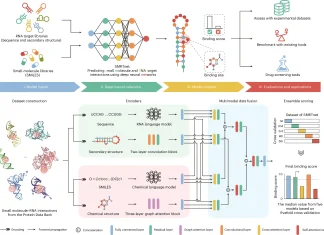
Beyond Tertiary Structures: SMRTnet’s Novel Approach to RNA Drug Discovery
Researchers from Tsinghua University and Peking University in China developed the SMRTnet tool, which employs a deep-learning approach to identify interactions between small molecules...
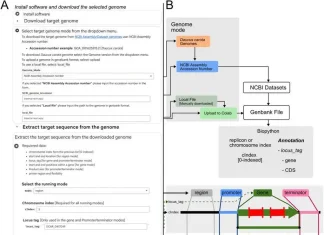
CoLabPCR: A One-stop Tool for Precise and Reproducible Primer Design
Researchers at IBBM (Instituto de Biotecnología y Biología Molecular) and NOVABIOMA Biomanufacturing FlexCo introduced ColabPCR, a Google Colab-based Python notebook created along with collaborators...

From Variant to Disease: How V2P Improves Phenotype-Aware Pathogenicity Prediction
Researchers at Mount Sinai Institute introduced Variant-to-Phenotype (V2P), a new machine learning framework that not only predicts whether a genetic variant is harmful but...
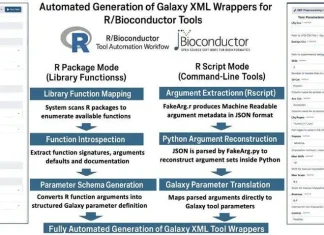
R2G2: Letting Bioconductor Fly in Galaxy Workflows
Researchers from the Center for Computational Life Sciences at the Cleveland Clinic introduce R2G2, a Python-R framework that automates the integration of R and...
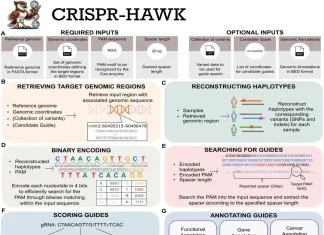
CRISPR-HAWK: Improving CRISPR with Haplotype-Aware Guide Design
CRISPR-HAWK is a guide-RNA design tool created by researchers from the University of Verona, Harvard Medical School, and the Broad Institute to account for...
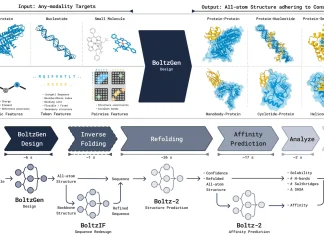
Designing Protein Binders with BoltzGen: A Unified Generative Approach
Researchers at MIT introduce an all-atom generative model, BoltzGen. The model incorporates a design specification language that allows researchers to control constraints like covalent...
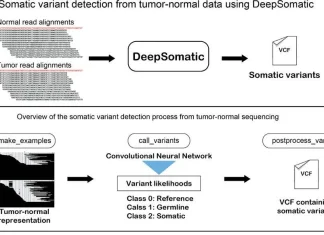
DeepSomatic: Redefining Somatic Variant Detection in the Genomic Sequencing Era
Scientists at UC Santa Cruz, Google, the National Institutes of Health, and partner institutes have developed DeepSomatic, a deep-learning tool that detects cancer-related DNA...
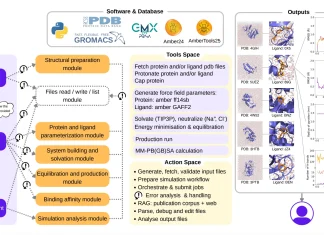
Towards Fully Autonomous Molecular Dynamics: The DynaMate Framework
Researchers from École Polytechnique Fédérale de Lausanne (EPFL) and the National Centre of Competence in Research (NCCR) Catalysis, Switzerland, introduced DynaMate, an autonomous AI system that...
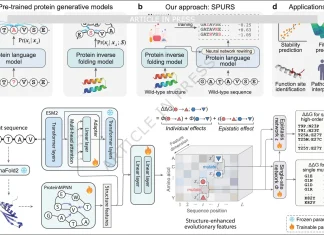
How SPURS Unlocks Scalable and Accurate Protein Stability Prediction
Protein engineering is in the middle of a quiet revolution, and a new study from researchers at the School of Computational Science and Engineering,...
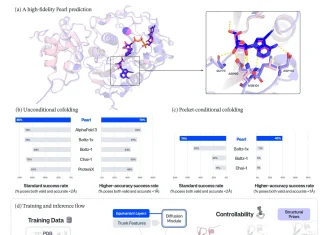
Placing Every Atom Right: PEARL’s Deep Learning Approach to Drug Discovery
Genesis Molecular AI and NVIDIA have introduced PEARL (Placing Every Atom in the Right Location), a deep learning foundation model designed for large-scale protein–ligand cofolding...
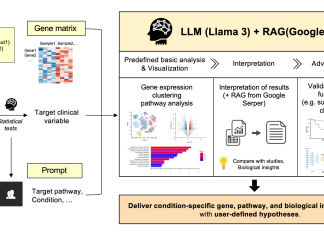
Agentic AI Meets RNA‑seq: A New Co‑Pilot For Downstream Analysis
Next-generation sequencing has transformed gene expression profiling into a routine experiment, but interpreting those matrices remains a challenge for many labs. Researchers from Kyungpook...
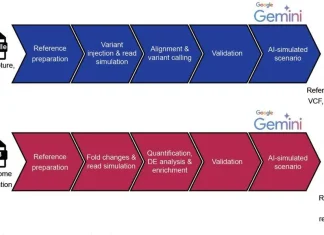
Teaching Genomics Made Easy: Meet eduomics, the Automated Omics Simulation Pipeline
When researchers at the Department of Biology and Biotechnology, the University of Pavia, set out to rethink bioinformatics teaching. They started from a simple...
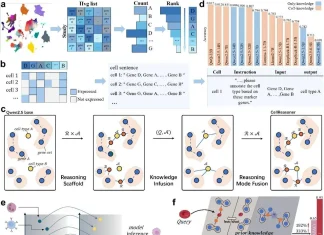
Unlocking Cellular Mysteries with CellReasoner: A New AI Tool for Biologists
In the rapidly evolving field of single-cell biology, accurately identifying cell types from complex datasets remains a cornerstone of research. A team of scientists...
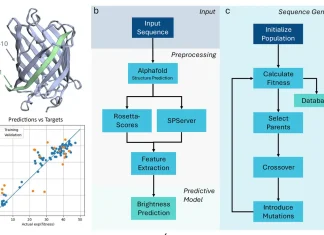
Minimal Data, Maximal Impact: The Future of Peptide Design with MDMI
Peptides, which are short chains of amino acids, have become increasingly important in the world of medicine and biotechnology. Their unique properties make them...
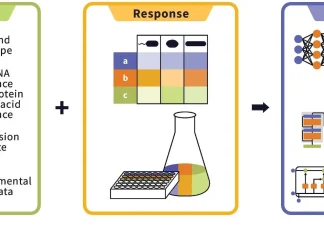
Can Machine Learning Finally Crack the Protein Expression Code?
A team of researchers from the University of Edinburgh and collaborators from institutions like Stanford and UC San Francisco have tackled a central question...

AlphaGenome: DeepMind’s New AI Model for Unlocking Genome Function
Imagine holding a book written in a language where only 2% of the pages contain clear instructions, while the remaining 98% seem like indecipherable...

From Boltz-1 to Boltz-2: Did We Finally Bridge the Gap Between...
In modern biology, accurately simulating biomolecular interactions is a major difficulty. Our capacity to predict biomolecular complex structures has significantly improved with recent developments...

D-I-TASSER Outperforms AlphaFold? A New Frontier in Protein Structure Modeling
The requirement and utility of conventional force field-based folding simulations have been called into question by the overwhelming success of deep learning techniques in...

Unlocking Biomolecular Secrets with AF3Score: A Leap Forward in Structural Evaluation
Researchers from Changping Laboratory in Beijing introduced AF3Score, a novel adaptation of AlphaFold3 designed to evaluate biomolecular structures with unprecedented accuracy. This innovation addresses...

Overlapping Genes, Unfolding Insights: Synthetic Biology Meets AI
Given that the sharing of codon nucleotides dramatically reduces the size of protein sequences, viruses in nature often generate overlapping genes (OLG) in alternate...
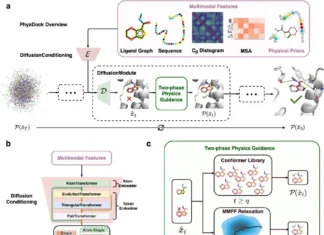
PhysDock: A New Era in Protein-Ligand Docking with AI and Physics
In a breakthrough that could transform drug discovery, a team of researchers from ShanghaiTech University has introduced PhysDock, a novel AI-powered model designed to...

Advancing Enzyme Design: RFdiffusion2 Enables Atomic-Level Scaffold Generation
In de novo enzyme design, the functional groups surrounding reaction transition states are described in the optimal active site. There are drawbacks to the...

45 Days Hands-on Skill Development Summer Training/Internship on “From Base Pairs...
Are you ready to transform your understanding of bioinformatics and gain hands-on experience with cutting-edge tools and technologies? The Centre of Bioinformatics Research & Technology...

Vision Transformers: A New Era in Protein-Ligand Affinity Prediction
Predicting how tightly a drug molecule (ligand) binds to its protein target is a cornerstone of modern drug discovery. Yet, this task remains a...

Building Better Models: How AI and Experimentation Shape GPCR Research in...
The GPCR Dock competitions are a set of community-wide evaluations of ligand docking and computational structural modeling for G protein-coupled receptors, a key class...

Fast, Accurate, and Flexible: How FLOWR is Transforming Molecular Design
In a recent breakthrough in AI-driven drug discovery, researchers from Pfizer, AstraZeneca, and Chalmers University unveiled a new generative framework called FLOWR, designed to...

Designer Miniproteins: New Frontier in GPCR-Targeted Drug Development
G protein-coupled receptors (GPCRs) are essential membrane proteins with dynamic conformations that are also major targets for drug development and discovery. However, designing protein...

Meet AgentRxiv: A Collaborative Framework for AI Research Agents to Accelerate...
Hundreds of scientists come together through collaborative efforts to accomplish a shared goal during scientific discovery processes. Current workflows generate research independently, yet they...
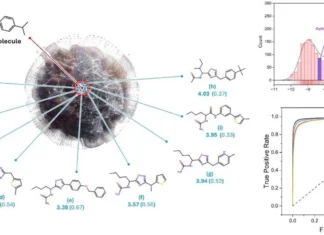
MolAI: The Deep Learning Model Transforming Molecular Descriptor Generation
Recent years have witnessed significant advancements in the fields of artificial intelligence (AI) and machine learning (ML), catalyzing a revolution in cheminformatics and drug...

Dyna-1: Unraveling Protein Dynamics with Deep Learning and NMR Data
There are more than 100 NMR relaxation datasets in the Biological Magnetic Resonance Data Bank (BMRB), which show an observable motion in µs-ms. NMR...

A New Roadmap for Precision Medicine: Overcoming Challenges with Post-Genomic Data
Advancements in precision medicine have long promised a future where treatments are tailored to individual genetic profiles. However, despite significant progress in genomics, the...

Lyra: A Revolutionary AI Model for Biological Sequence Modeling
Researchers from the Broad Institute of MIT and Harvard, Harvard University, Carnegie Mellon University, and Howard Hughes Medical Institute, the study introduces Lyra—a groundbreaking...

How LUC7 Protein Family Members Differentially Regulate mRNA Splicing in Cancer
Myeloid neoplasms are linked to mutations or deletions of the U1 snRNP-associated factor LUC7L2, and cellular metabolism is changed when LUC7L2 is knocked down....
Must Read
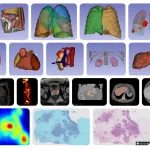
MHub.ai: Standardizing AI for Reproducible Medical Imaging
An inter-institutional collaboration across the US, Germany, and the Netherlands introduces MHub.ai, an accessibility and reproducibility-prioritizing, open source platform for standardized access to AI...
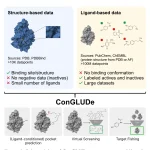
ConGLUDe: Toward General-Purpose Foundation Models for Drug Discovery
Researchers from Johannes Kepler University Linz, Austria, and Merck HealthCare, Germany, developed ConGLUDe (Contrastive Geometric Learning for Unified Computational Drug Design), an AI-based model for drug...

Claude Opus 4.5 and the Future of AI-Driven Research in Healthcare and Biotechnology
The growing complexity of biomedical research and healthcare demands AI systems that can go beyond general assistance to support end-to-end scientific workflows. Building on...
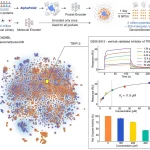
DrugCLIP Enables High-Throughput Virtual Screening Across the Human Proteome
Researchers at Tsinghua University have introduced DrugCLIP, a contrastive learning framework that enables ultrafast and accurate virtual screening at a genome-wide scale. Published in...

Beyond the Sequence: How FoldMason is Redefining Multiple Protein Structure Alignment at Scale
The authors at Seoul National University developed FoldMason, a free, open-source, progressive Multiple Structural Alignment (MSTA) method published in Science that uses a structural...