
BIOINFORMATICS TOOLS
Gene Prediction
- GENEID – A program to predict genes, exons, splice sites and other signals along a DNA sequence.
- AUGUSTUS – Program that predicts genes in eukaryotic genomic sequences.
- EuGene – Integrative gene finder for eukaryotic and prokaryotic genomes.
- PseudoPipe – A stand alone computational pipeline for pseudogene annotation.
- GenScan – Web server for the identification of complete gene structures in genomic DNA.
- HMMgene – 1.1 – Program for prediction of vertebrate and C. elegans genes.
Must Read
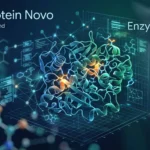
Google DeepMind Introduces AlphaProtein Novo: How AI Is Designing Enzymes from Scratch
A team of researchers from Google DeepMind (London and Mountain View), the California Institute of Technology (Pasadena), and the University of Pittsburgh has just...

9,814 Poison Exons Mapped: A Hidden Splicing Switch Behind Brain Disorders
MGH and Broad researchers map 9,814 poison exons and link 1,625 pathogenic variants to brain disorders. Published in Genome Biology.
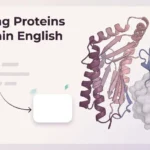
Prompteina: Designing Proteins From Plain-English Descriptions
Researchers at the University of Washington, the Allen Institute for AI (Ai2), the National University of Singapore, and the Howard Hughes Medical Institute have...
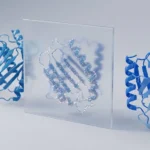
SynthID Bio: Google DeepMind Brings Invisible Watermarks to AI-Designed Proteins
Google DeepMind's SynthID Bio, published in Nature, hides watermarks in AI-designed proteins while preserving binding. How it works and its limits.

TurbOmics: A Free, No-Code Web Platform That Puts Metabolomics at the Center of Multi-Omics...
TurbOmics, a free web platform from CNIC and EMBL, integrates metabolomics with proteomics and transcriptomics data, no coding needed.