Google DeepMind’s Mass Spec Skills Turn Gemini Into a Molecule-Identification Assistant
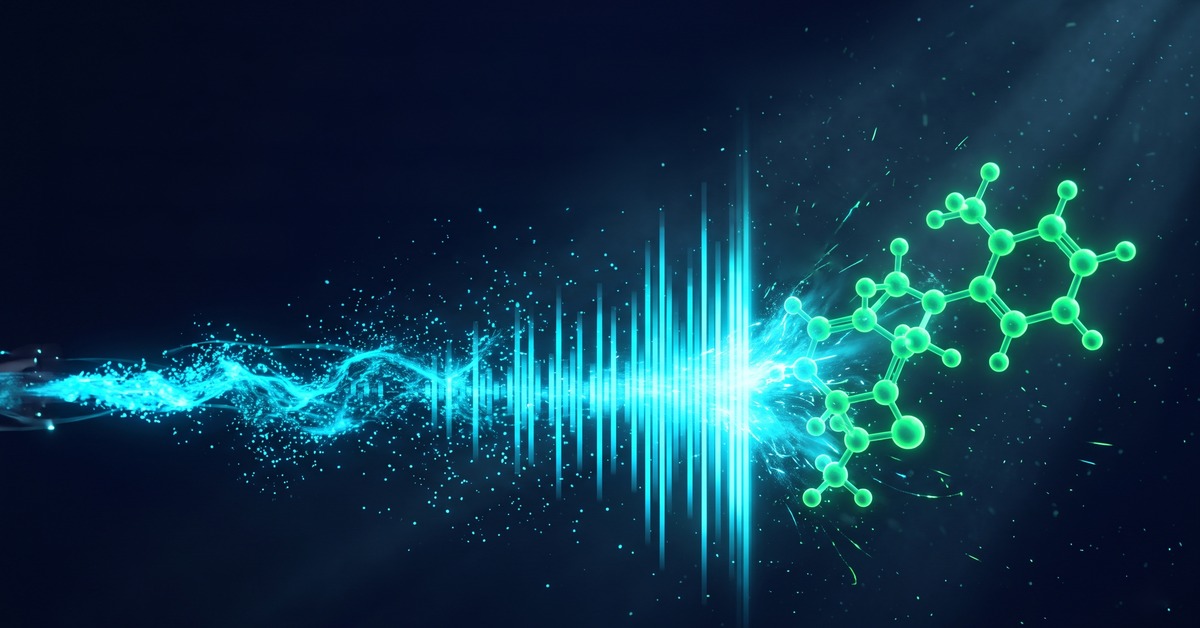
Researchers at Google DeepMind have released Mass Spec Skills, a set of agent tools for Google Antigravity that lets Gemini models work through tandem mass spectrometry (MS/MS) data, from a raw spectrum to a proposed chemical structure with the evidence laid out for a chemist to check. The announcement, published on the Google DeepMind blog on 25 November 2026, is a company release: it has no accompanying peer-reviewed paper or preprint, and the performance figures below are the company’s own.
The “dark matter” problem in mass spectrometry
A single drop of blood, soil or plant extract can hold thousands of small molecules: metabolites, hormones, drugs and their breakdown products, pollutants and natural products. Modern instruments detect these as tens of thousands of signals, but a signal is not a structure. The usual way to identify a compound is to match its fragment spectrum against libraries of reference spectra. According to the DeepMind team, that matching annotates only about 5% of measured spectra on average (around 10% for human samples). The unidentified rest is often called the “dark matter” of metabolomics.
Many of those unknowns are already listed in chemical databases such as PubChem; nobody has recorded their spectra yet. Identifying them means working out the structure from the fragments themselves. That multi-step process works, but it is slow when done by hand for thousands of spectra.
How Mass Spec Skills work
Rather than asking a language model to guess structures, the skills connect Gemini to established, openly available tools. The agent cleans the spectrum with matchms, searches the GNPS and MoNA reference libraries, predicts the molecular formula with SIRIUS, scores candidate structures from PubChem against observed fragments with MAGMa and MetFrag, and checks the final molecule with RDKit. Users describe the task and instrument tolerances in plain language, and the agent chains the steps and produces an auditable report.
In a worked example from the post, the agent took a negative-ion spectrum with no library match, assigned the formula C20H21ClN6O, and ranked all 845 matching isomers in PubChem. Several candidates explained the same share of the spectrum by mass alone. The agent separated them using fragmentation chemistry: a pattern of neutral losses pointed to a central urea bond, which ruled out the look-alike isomers.
Key terms in plain language
- Tandem mass spectrometry (MS/MS): a molecule is weighed, broken into fragments, and the fragments are weighed again. The fragment pattern acts as a fingerprint.
- Neutral loss: the mass difference between two fragments, which often reveals a specific chemical group lost during breakage.
- Isomers: molecules with the same formula but a different arrangement of atoms.
What the benchmark shows, and what it doesn’t
DeepMind tested the system on 100 compounds from the Enamine REAL MS/MS collection in MoNA, with three attempts per spectrum. Without internet access or skills, all three Gemini models tested scored below 4%. With internet access alone, the frontier models missed between a quarter and a third of spectra, and the lightweight model missed more than three-quarters. With Mass Spec Skills added, the company reports that all three models, including the lightweight Gemini 3.8 Flash, identified the exact molecule in around 97% of attempts and generated fewer tokens per attempt.
Researchers should read these numbers carefully. The benchmark compounds already have reference spectra in public libraries, so the 97% figure measures reliable retrieval and verification. It does not measure discovery of truly unknown molecules. DeepMind itself notes the limits. MS/MS alone cannot distinguish mirror-image molecules or some closely related isomers, which need retention time, ion mobility or NMR. Genuinely new compounds that aren’t in any database cannot be confirmed by the agent; for those it offers a starting point, such as a predicted formula and peak assignments.
Why it matters for researchers
- Lower barrier to entry: bench scientists without scripting experience could run multi-tool annotation workflows.
- Auditable reasoning: each step uses community tools that experts already trust, so results can be checked rather than taken on faith.
- Natural-product and drug discovery: faster prioritisation of candidate compounds in complex extracts.
- Still needs independent validation: the next test is performance on unknowns and on independent datasets.
For another approach to putting metabolomics at the centre of multi-omics analysis, see CBIRT’s coverage of TurbOmics.
The skills are available now as a plugin in the Google Antigravity app. Would an agent like this change how your lab handles unannotated spectra? Share your thoughts with the CBIRT community.
Reference: Brunck R., Ganscha S., Guntupalli S., Lasecki D., Marfani G., Mason J., Masoom H., Mirshafian R., Papa E., Tsangalidou Z. “From spectrum to structure: Identifying molecules with Mass Spec Skills for Google Antigravity.” Google DeepMind blog, 25 November 2026. https://deepmind.google/blog/interpreting-mass-spectra-with-google-antigravity/
Note on peer review: This work was released by Google DeepMind as a blog post on its own website, with no accompanying paper or preprint. It has not been peer-reviewed. All performance figures reported here are as stated by the company.
Disclaimer:
The research discussed in this article was conducted and published by the authors of the referenced announcement. CBIRT has no involvement in the research itself. This article is intended solely to raise awareness about recent developments and does not claim authorship or endorsement of the research.