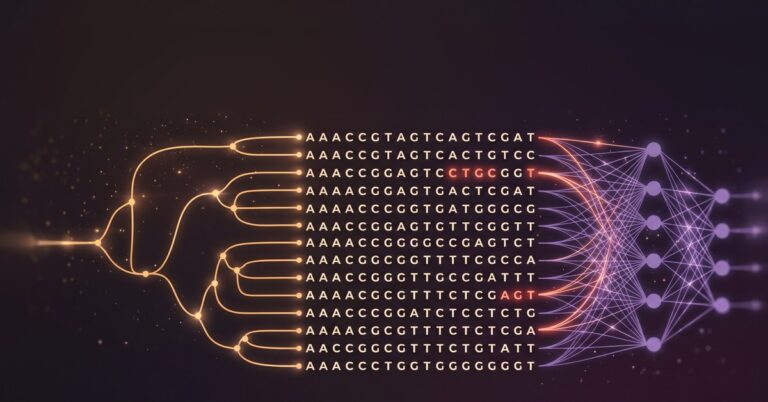
GPN-Star: A Compact DNA Language Model That Reads Evolution to Predict Which Variants Matter
UC Berkeley’s GPN-Star uses whole-genome alignments and species trees to predict variant effects, outperforming larger DNA models on non-coding variants.

UC Berkeley’s GPN-Star uses whole-genome alignments and species trees to predict variant effects, outperforming larger DNA models on non-coding variants.
Biohub, the U.S. DOE, NIH, Google DeepMind, Isomorphic Labs and Meta expand the Virtual Biology Initiative to about $1.8 billion, aiming to build open, AI-ready datasets for predictive models of human cells.

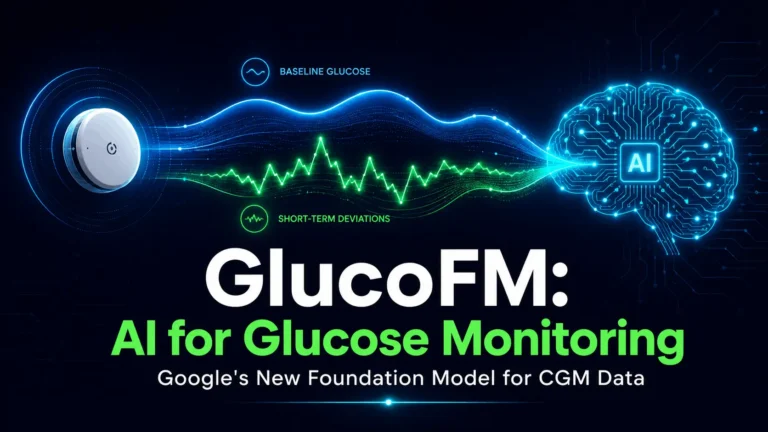
Wearables have gotten remarkably good at estimating how much we move and how well we sleep. But glucose regulation — the hidden machinery behind metabolic health — doesn’t show up directly in motion or heart-rate data. It needs its own signal. That’s where continuous glucose monitors (CGMs) come in, tracking interstitial glucose every few minutes…

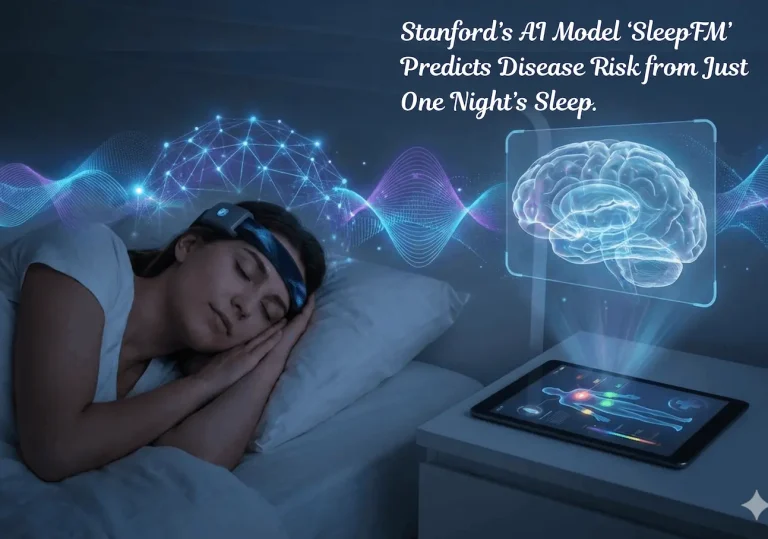
Stanford Medicine and researchers in Denmark and Boston have built an AI foundation model, SleepFM, that can read a single night of lab‑recorded sleep and forecast the risk of more than 100 diseases years before they appear in the clinic. This feels like the moment sleep medicine meets large‑scale, multimodal representation learning in a very…

Intrinsically disordered proteins (IDPs) are proteins that are central to neurodegenerative diseases and aggressive cancers like prostate cancer, have been considered ‘undruggable’ as structures predicted by traditional tools to determine how they function and interact, and to be studied in medicine and biotechnology are static. ToposBio introduced Topos-1, an all-atom generative model, which addresses this…

Genesis Molecular AI and NVIDIA have introduced PEARL (Placing Every Atom in the Right Location), a deep learning foundation model designed for large-scale protein–ligand cofolding in computational drug discovery. By leveraging synthetic training data, SO(3)-equivariant diffusion architectures, and controllable inference, PEARL achieves more accurate and physically valid binding pose predictions, outperforming AlphaFold 3 and other leading…

Next-generation sequencing has transformed gene expression profiling into a routine experiment, but interpreting those matrices remains a challenge for many labs. Researchers from Kyungpook National University, Republic of Korea, address this gap by developing an “agentic” AI system that can plan, execute, and interpret RNA-sequencing downstream analysis for researchers with limited biological backgrounds. As a…

Artificial Life (ALife) has fascinated researchers for years, offering insights into the principles of life, intelligence, and evolution. In a pioneering study, Sakana AI, in collaboration with MIT, OpenAI, The Swiss AI Lab IDSIA, and Ken Stanley, introduced Automated Search for Artificial Life (ASAL)—a revolutionary approach using foundation models (FMs) to explore and analyze artificial…

In a groundbreaking collaboration, researchers from the Arc Institute, Stanford University, and NVIDIA have unveiled Evo 2, a cutting-edge AI model designed to understand and manipulate the genetic code across all domains of life. This model represents a significant leap forward in genomic research. Built on the NVIDIA DGX Cloud, Evo 2 is now the…

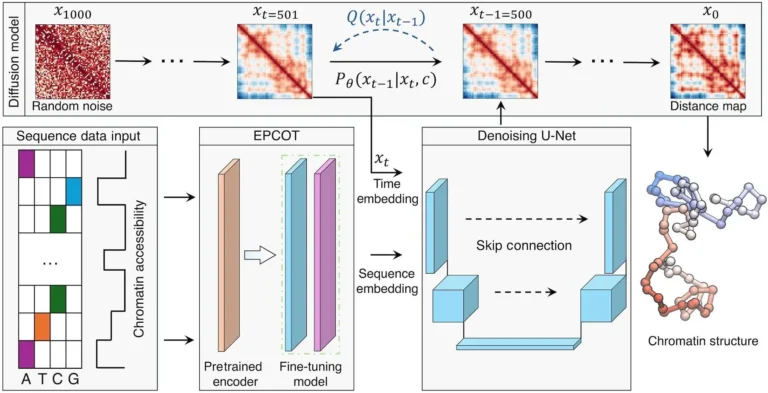
Microscopic imaging and high-throughput sequencing methods show that chromatin structures differ greatly between cells, although characterization is still difficult because of the labor-intensive nature of the investigations. Researchers from the Massachusetts Institute of Technology present ChromoGen, a generative model that effectively predicts three-dimensional, single-cell chromatin conformations de novo with both region and cell type specificity….

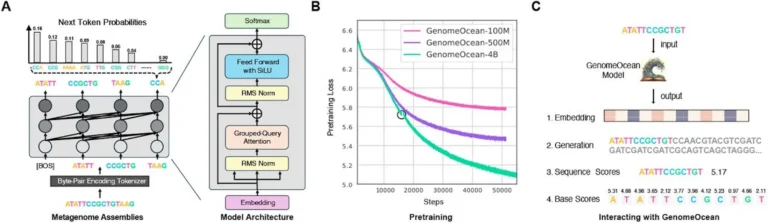
The field of bioinformatics is witnessing a major transformation with the development of genome foundation models. In a recent study conducted by researchers from Northwestern University and Lawrence Berkeley National Laboratory, along with collaborators from multiple institutions, a groundbreaking model named GenomeOcean has been introduced. This 4-billion-parameter generative genome foundation model is trained on large-scale…

In the ever-evolving world of infectious diseases, early detection and monitoring play a critical role in combating pandemics. In a groundbreaking collaboration, researchers from the University of Southern California, Prime Intellect, and the Nucleic Acid Observatory have unveiled METAGENE-1, a state-of-the-art metagenomic foundation model designed to transform public health monitoring and pathogen detection. This innovative…

Antibodies, the sentinels of our immune system, are masters of adaptability. Their ability to bind to an almost infinite range of pathogens lies in their hypervariable regions—parts of their structure that evolve rapidly to recognize new threats. However, these regions present an enormous challenge as they are always regarded as highly variable because they lack…

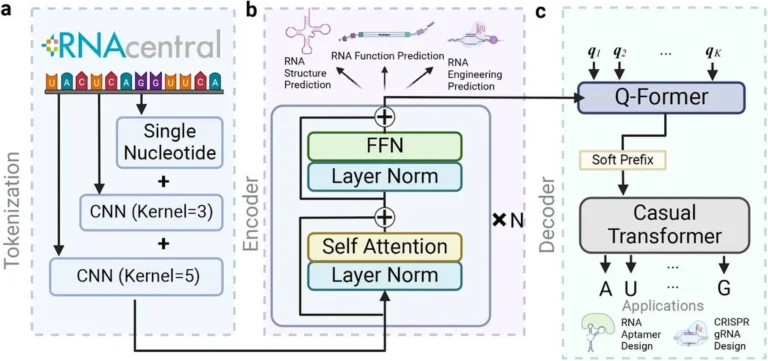
Many biological processes depend on RNA engineering, which advances the knowledge of life’s mechanisms and propels the discovery of new drugs. New strategies are made possible by improvements in RNA foundation models, but current techniques are still unable to produce unique sequences with particular functionalities. Here, scientists from Princeton University and BioMap Research present RNAGenesis,…

About 20% of human proteins lack recognized functionalities, and over 40% lack context-specific functionals, underscoring the difficulties of comprehending these proteins and their varied roles in different states, illnesses, and situations. To model, generate, and predict protein phenotypes across five interconnected knowledge categories—functional protein domains, illness connections, therapeutic processes, molecular functions, and molecular interactions—researchers from…

The field of genomics is ever-changing as a result of an increase in automation and aspects of biological engineering. A groundbreaking study led by researchers from InstaDeep and Nvidia introduces a Nucleotide Transformer pre-trained on DNA sequences. These models generate context-specific nucleotide representations, allowing accurate molecular phenotype predictions and improving genetic variant prioritization, marking a…

The DNA sequences of all living organisms hold the fundamental instructions for life. Massive datasets of entire genomes, together with machine learning advancements, may allow for the creation of a biological foundation model that accelerates the generative design and mechanistic comprehension of intricate genetic relationships. The researchers from Arc Institute and Stanford University, USA, introduced…

A notable progress in protein prediction and generative tasks, such as 3D structure prediction, protein design, and conformational dynamics, has been made in recent years with the rapid development of protein foundation models. Nevertheless, the lack of a consistent evaluation methodology means that the potential and constraints of these models are still little understood. Researchers…

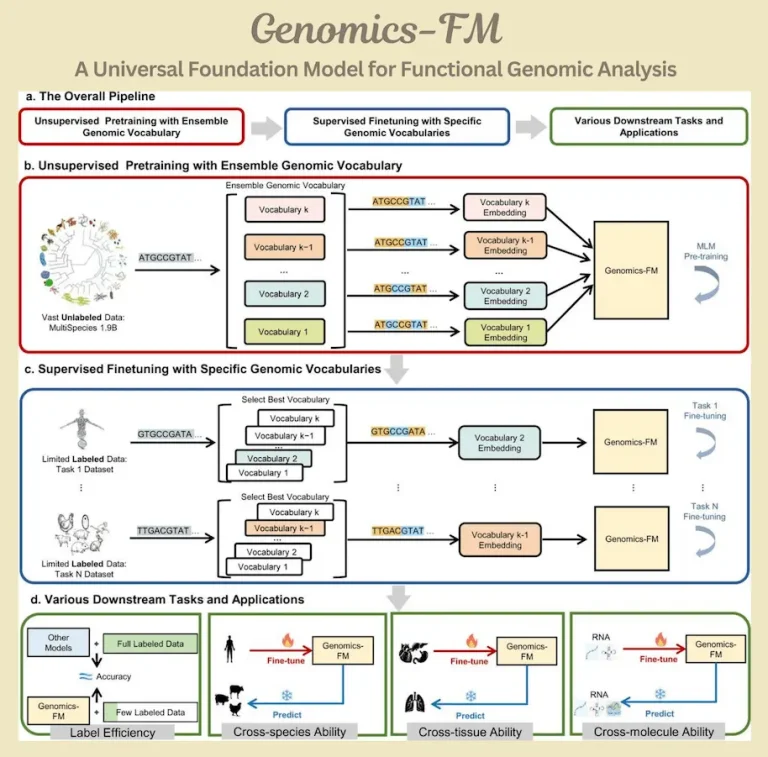
The ground-breaking study introduces functional genomics analysis’s foundation model, Genomics-FM. This versatile and data-efficient model overcomes the limitations of traditional AI approaches. Genomics is a field that has seen a transformative shift due to the introduction of artificial intelligence. Researchers are increasingly using AI to unveil the intricacies of genomes, from understanding genetic diseases to…

Recent advances in chemistry, material science, and biological research have been greatly aided by large language models (LLMs), which act as flexible foundation models for various downstream predictive or generative tasks. A team of researchers from Zhejiang University and with their collaborators in China proposed an LLM-based foundation model technique called AMP-Designer as a quick…
| Cookie | Duration | Description |
|---|---|---|
| cookielawinfo-checkbox-analytics | 11 months | This cookie is set by GDPR Cookie Consent plugin. The cookie is used to store the user consent for the cookies in the category "Analytics". |
| cookielawinfo-checkbox-functional | 11 months | The cookie is set by GDPR cookie consent to record the user consent for the cookies in the category "Functional". |
| cookielawinfo-checkbox-necessary | 11 months | This cookie is set by GDPR Cookie Consent plugin. The cookies is used to store the user consent for the cookies in the category "Necessary". |
| cookielawinfo-checkbox-others | 11 months | This cookie is set by GDPR Cookie Consent plugin. The cookie is used to store the user consent for the cookies in the category "Other. |
| cookielawinfo-checkbox-performance | 11 months | This cookie is set by GDPR Cookie Consent plugin. The cookie is used to store the user consent for the cookies in the category "Performance". |
| viewed_cookie_policy | 11 months | The cookie is set by the GDPR Cookie Consent plugin and is used to store whether or not user has consented to the use of cookies. It does not store any personal data. |