
9,814 Poison Exons Mapped: A Hidden Splicing Switch Behind Brain Disorders
MGH and Broad researchers map 9,814 poison exons and link 1,625 pathogenic variants to brain disorders. Published in Genome Biology.
Genomics research and analysis: sequencing studies, variant discovery, gene regulation and the computational methods behind them.

MGH and Broad researchers map 9,814 poison exons and link 1,625 pathogenic variants to brain disorders. Published in Genome Biology.

The work behind AlphaGenome Atlas comes from a large team at Google DeepMind, led by researchers working alongside scientists from the University of Exeter Medical School, the Broad Institute of MIT and Harvard, Boston Children’s Hospital, the Stowers Institute for Medical Research, and several other research centers in the US and UK. Together, they have…

OpenAI has introduced Rosalind Workbench, a new research-preview environment available through the ChatGPT app that brings scientific tools, specialized biology models, and data workflows into a single connected space — letting researchers move from a biological question to inspectable evidence without losing the thread between disconnected tools. Scientific research rarely happens inside a single application….

For years, genomics has had a dirty little secret: even our best reference genomes have gaps. Now, a large international team of the National Human Genome Research Institute (NHGRI) at the NIH, along with the National Institute of Standards and Technology (NIST), has closed most of those gaps for good. Their new study introduces what…

Here’s an uncomfortable question for anyone building AI tools for genomics: can a model tell the difference between a real biological signal and a batch effect? Can it recognize when a QC flag should send it back to the drawing board? Most AI benchmarks test whether a model can execute a known analysis pipeline. Almost…

If you’ve ever tried to figure out exactly where a transcription factor sits down on the genome inside a single cell, you know it’s one of those problems that sounds simple but has quietly resisted easy solutions for years. A new paper out in Cell from a team of researchers at Weill Cornell Medicine and…

The study led by researchers from UC San Diego and UC Santa Cruz introduces PanMAN, a new data structure designed to overcome the limitations of current pangenome formats. Applied to SARS-CoV-2,PanMAN compressed the entire genome sequence into just 366 MB while still preserving all the variations. What is Pangenomics? Studying genomes helps us in understanding…
An integrated atlas of the human 4D genome just dropped, and it is breathtaking in its ambition. In a massive consortium effort, researchers from various institutions, including UMass Chan Medical School, Northwestern University, and other collaborators, have assembled one of the most comprehensive views to date of how the human genome folds and functions in…
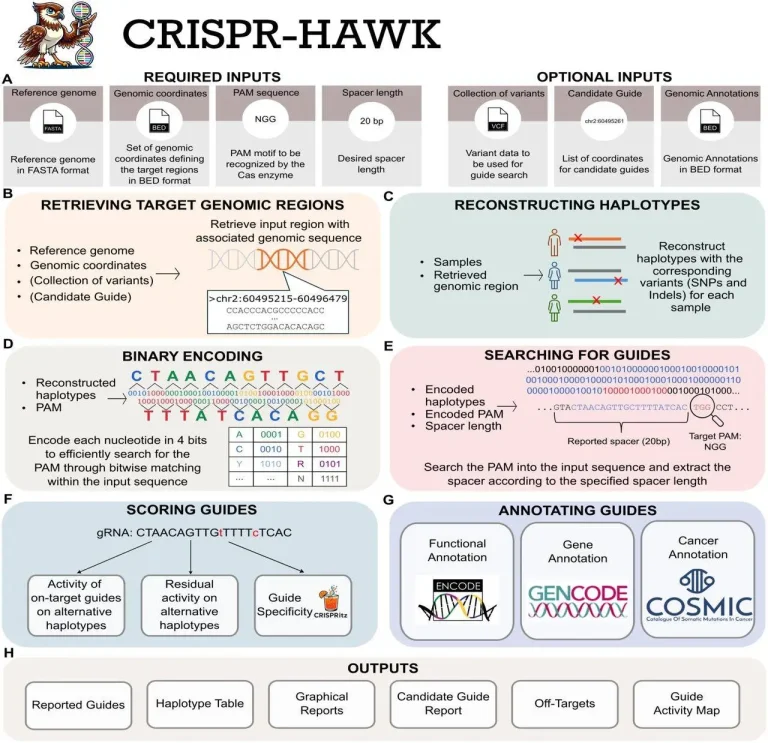
CRISPR-HAWK is a guide-RNA design tool created by researchers from the University of Verona, Harvard Medical School, and the Broad Institute to account for real-world human genetic variation. Unlike typical CRISPR tools, which rely solely on a reference genome, it takes into account population and individual variants, as well as haplotypes, to predict how editing…

Scientists at UC Santa Cruz, Google, the National Institutes of Health, and partner institutes have developed DeepSomatic, a deep-learning tool that detects cancer-related DNA alterations (somatic variations) from both short-read and long-read sequencing. Unlike other tools, it can operate with whole-genome, exome, tumor-normal, tumor-only, and FFPE samples. The team generated and publicly released five matched…

Next-generation sequencing has transformed gene expression profiling into a routine experiment, but interpreting those matrices remains a challenge for many labs. Researchers from Kyungpook National University, Republic of Korea, address this gap by developing an “agentic” AI system that can plan, execute, and interpret RNA-sequencing downstream analysis for researchers with limited biological backgrounds. As a…

When researchers at the Department of Biology and Biotechnology, the University of Pavia, set out to rethink bioinformatics teaching. They started from a simple observation: students are getting very good at running tools, but not necessarily at telling the biological story behind the output. Their new pipeline, “Eduomics”, is an attempt to fix exactly that…

Imagine holding a book written in a language where only 2% of the pages contain clear instructions, while the remaining 98% seem like indecipherable code. This mirrors the challenge scientists face with the human genome, where protein-coding regions make up a tiny fraction while non-coding regions control life’s essential processes. For decades, interpreting these regulatory…

Are you ready to transform your understanding of bioinformatics and gain hands-on experience with cutting-edge tools and technologies? The Centre of Bioinformatics Research & Technology (CBIRT) is thrilled to announce its Summer Training/Internship Program—From Base Pairs to Big Data: Bioinformatics Bootcamp for the Next Generation. This intensive 1.5-month program (15 May to 30 June 2025) is designed to equip students…

Shotgun metagenomics has revolutionized microbiome research, allowing scientists to study microbial communities at an unprecedented depth. However, analyzing the massive amounts of sequencing data generated by this technique is no easy task. To address this challenge, researchers from multiple institutions across China specializing in microbiome research, bioinformatics, and genomics have developed EasyMetagenome, a user-friendly and…
In a groundbreaking collaboration, researchers from the Arc Institute, Stanford University, and NVIDIA have unveiled Evo 2, a cutting-edge AI model designed to understand and manipulate the genetic code across all domains of life. This model represents a significant leap forward in genomic research. Built on the NVIDIA DGX Cloud, Evo 2 is now the…
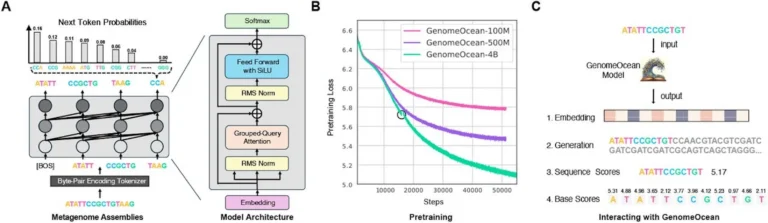
The field of bioinformatics is witnessing a major transformation with the development of genome foundation models. In a recent study conducted by researchers from Northwestern University and Lawrence Berkeley National Laboratory, along with collaborators from multiple institutions, a groundbreaking model named GenomeOcean has been introduced. This 4-billion-parameter generative genome foundation model is trained on large-scale…

It is essential to connect sequence variation to phenotypic effects to effectively utilize huge genomic datasets. Here, researchers describe a unique method for characterizing spontaneously evolved variations of a rice immune receptor by integrating protein language modeling with directed evolution. The rice immunological receptor Pik-1 was designed to avoid detection by existing Pik-1 alleles by…
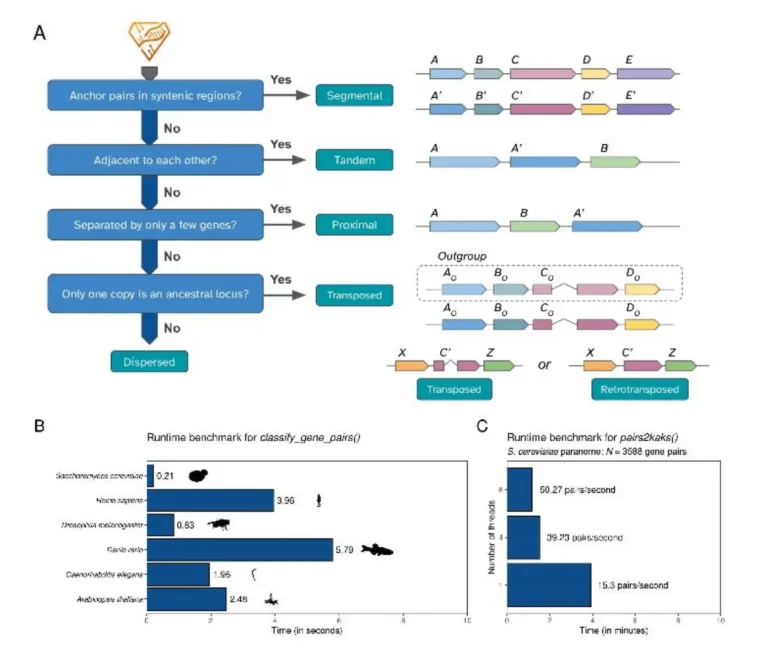
A major factor in evolution, genome duplications have different effects on the expression, function, and regulation of genes. However, multiple duplication modes make it difficult to detect and categorize duplicated genes because of antiquated or useless instruments. Here, scientists from Ghent University, University of Pretoria, and Nanjing Agricultural University introduce doubletrouble, an R/Bioconductor program that…

Understanding the human genome is often compared to deciphering an ancient, complex language with three billion characters. While AI has made great strides in processing natural languages, reading DNA as fluently as a first language has remained a challenge—until now. A groundbreaking study by Oleksandr Koreniuk and Malick G. Njie from Ecotone, Brooklyn, introduces dnaSORA,…
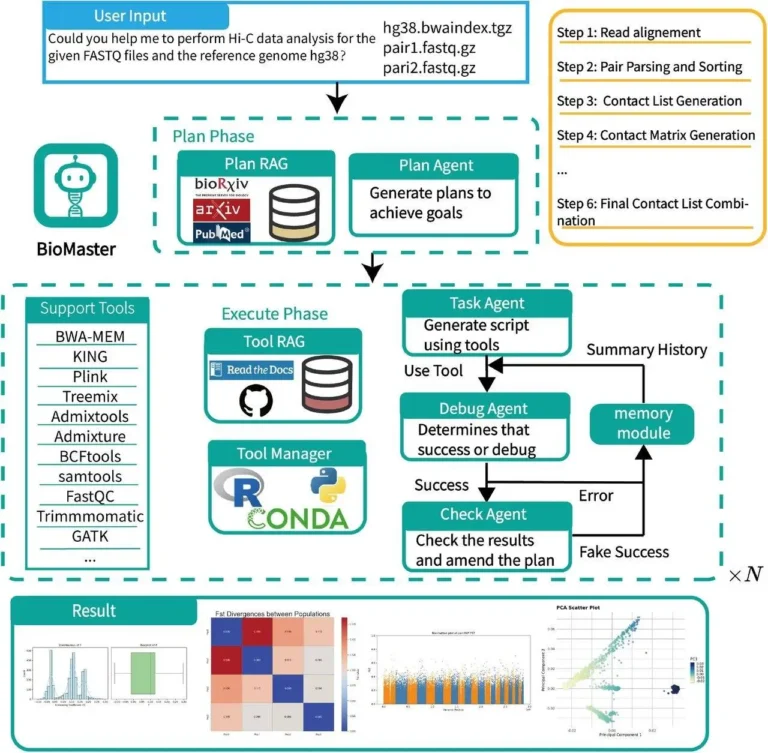
In the ever-evolving field of bioinformatics, automation has become a necessity for handling complex genomic data efficiently. A recent study by researchers at Hong Kong University of Science and Technology, China, presents BioMaster, a multi-agent system designed to streamline bioinformatics workflows. Integrating specialized AI agents, BioMaster enhances automation, error handling, and data validation, making it…

The display of many types of data with different orders of magnitude is a critical challenge in the rapid development of high-throughput omics technologies. Researchers from Hainan University and Sun Yat-Sen University present DataColor, a comprehensive software solution that has been painstakingly developed to address this issue and to close this gap. DataColor is an…

Finding the genes that can cause tumors in various tissues is one of the main objectives of cancer genomics. Computational techniques that use various positive selection signals in the pattern of gene mutations seen in tumors have been created for this goal. One indication of positive selection is the accumulation of mutations in regions of…

Bioinformatics sits at the fascinating intersection of biology, computer science, and data analysis, with Python as a powerful language that drives groundbreaking research and computational discoveries. As biological datasets continue to grow exponentially in complexity and size, researchers and computational biologists increasingly rely on Python’s robust ecosystem of specialized libraries to process genomic data, analyze…

Many biological processes depend on RNA engineering, which advances the knowledge of life’s mechanisms and propels the discovery of new drugs. New strategies are made possible by improvements in RNA foundation models, but current techniques are still unable to produce unique sequences with particular functionalities. Here, scientists from Princeton University and BioMap Research present RNAGenesis,…

In a groundbreaking study by researchers at the Harbin Institute of Technology, a novel approach to interpreting single-cell RNA sequencing (scRNA-seq) data has emerged. The team, led by experts in computational biology and artificial intelligence, introduced SCREADER—a method that harnesses the power of large language models (LLMs) to transform our understanding of cellular complexity. This…

In 2024, bioinformatics has once again proven to be a cornerstone of innovation, driving discoveries that are reshaping our understanding of life at a molecular level. Did you know that the number of genetic variants uncovered this year alone surpassed expectations by millions? These breakthroughs are paving the way for revolutionary applications in healthcare, drug…
As we approach 2025, the integration of artificial intelligence (AI) into bioinformatics is set to transform the field dramatically. Bioinformaticians must stay abreast of several key trends that will shape research methodologies, data analysis, drug discovery, and personalized medicine. Here are the top AI trends to watch that will significantly impact bioinformatics in the coming…

A prevailing challenge in genomics still revolves around the comprehension of structural variants, one of which is copy number variation (CNV). To undertake the task of conquering this challenge, researchers from the National Institutes of Health, along with others, have developed a groundbreaking software known as CNV Finder. This deep-learning-based software assists in CNV identification and aids in redefining…

The field of genomics is ever-changing as a result of an increase in automation and aspects of biological engineering. A groundbreaking study led by researchers from InstaDeep and Nvidia introduces a Nucleotide Transformer pre-trained on DNA sequences. These models generate context-specific nucleotide representations, allowing accurate molecular phenotype predictions and improving genetic variant prioritization, marking a…

Gaining insight into the peculiar relationship between the genes we possess and the characteristics they express is undoubtedly one of the most intriguing quests in biology. Understanding the relationship between genotype and phenotype can benefit medicine, agriculture, and evolutionism. Researchers from the University of California at San Diego have offered a compelling solution to this problem…

With its recent advancements, scRNA sequencing has enabled scientists to view the biological world at the most local of levels- the single cell. Thanks to scRNA sequencing, we can now examine gene expression in the context of individual cells, enabling us to fathom development, diseases, and the intricate biological networks’ evolutionary cell diversity. The problem…

The DNA sequences of all living organisms hold the fundamental instructions for life. Massive datasets of entire genomes, together with machine learning advancements, may allow for the creation of a biological foundation model that accelerates the generative design and mechanistic comprehension of intricate genetic relationships. The researchers from Arc Institute and Stanford University, USA, introduced…

Currently, we know that genomic variations are gathered up in somatic cells as one age, but we have a limited understanding of mitochondrial DNA (mtDNA) mosaicism. mtDNA has many effects on various diseases, particularly cancer, and they might have a role in the aging process. Unlike nuclear DNA, which is inherited from both parents, mtDNA…
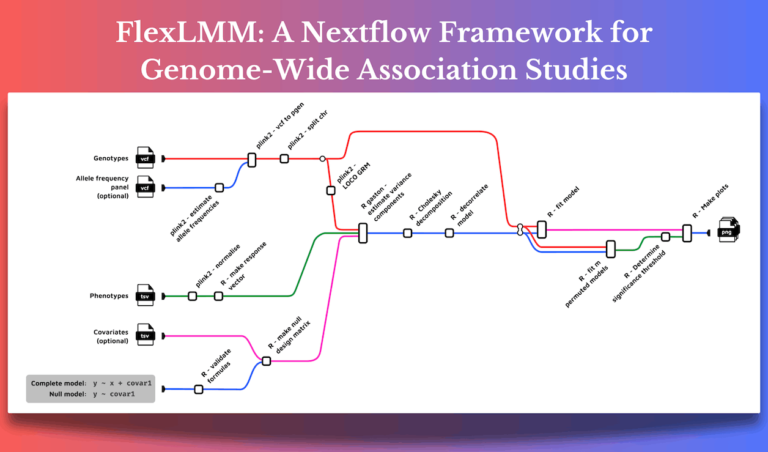
Genome-wide association Studies (GWAS) consider sequencing the DNA of a person and then comparing it with a population to find genetic markers associated with a disease or trait, and this is why they have become an integral part of modern genomics. However, the ongoing development of GWAS has led to the growth of problems associated…

An increasing number of studies employ metagenomic analyses to investigate the taxonomy and function of microorganism communities. In many microbial research, one typical job is to retrieve metagenome-assembled genomes (MAGs) by binning contigs from metagenomic data. Yet, during this procedure, a substantial amount of information is lost. It is, therefore, essential to have functional and…

The investigation of nuclear anomalies and how they influence the regulation of genes warrants analysis of various cellular functions and diseases. The researchers from MIT, Harvard, and the University of California San Francisco describe a new approach, Expansion in situ Genome Sequencing (ExIGS), that allows, for the first time, to unravel the relationship between nuclear…

In a remarkable corridor of achievement, the scientists of the University of Southampton have reputedly gotten the ability to conserve the complete human genomic sequence on a disruptive 5D memory crystal. This achievement is an exceptional phenomenon in data storage and has profound implications for preserving the genetic heritage of humanity and other species. The…

In a groundbreaking study published in Nature Methods, a group of scientists consisting of the UC Santa Cruz Genomics Institute, University of Ferrara, Google LLC, and others individuated a new way of building customized pangenome references. The researchers made a great step forward in genomic research as they managed to overcome certain limitations of the…

A recent study by Tong Li and colleagues from the Wellcome Sanger Institute and other institutions introduces WebAtlas, an innovative pipeline aimed at addressing such challenges. WebAtlas provides a friendly interactive environment for sharing and discovering unified datasets of single-cell and spatial transcriptomics. To understand the complexity of tissues and organs, the world of biological…

The availability of genome data is of great importance in this day and age. But, transcriptome data (which is a subset of the entire genome, a set of transcribed genes into RNA) is more readily available than the entire genome data for many species. Yet, it has limitations since it always needs a reference set…

Trying to visualize available genomic data is of great interest. Currently, there exists a lot of specialized visualization tools, but most need to be tailored for a certain cause—the cost and labor increase since these applications need extensive programming done by bioinformaticians and software developers. Biological research is awash with large, complex, multilayered datasets that…

When it comes to training and assessing genomic analytic tools, managing differential expression, and investigating data architecture, synthetic data production in omics replicates real-world biological data. Previously, researchers created Precious1GPT, a multimodal transformer trained on metadata, transcriptome, and methylation data to predict biological age and find dual-purpose therapeutic targets that may be linked to age-related…

In genomics, we need to understand the gene content of an organism to understand its true biology. This is essential for large eukaryotic genomes, such as the human genome, which encompasses approximately 20,000 protein-coding genes. Currently, tools have been developed to identify gene content changes in bacterial genomes, but none apply to the human pangenome….
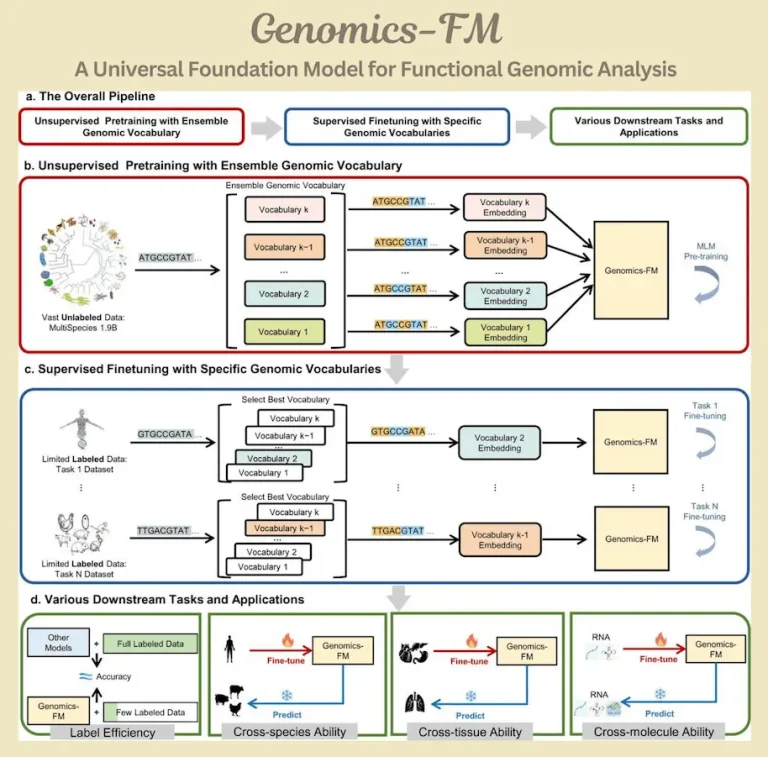
The ground-breaking study introduces functional genomics analysis’s foundation model, Genomics-FM. This versatile and data-efficient model overcomes the limitations of traditional AI approaches. Genomics is a field that has seen a transformative shift due to the introduction of artificial intelligence. Researchers are increasingly using AI to unveil the intricacies of genomes, from understanding genetic diseases to…

Antibiotic resistance is increasing as a global problem, meaning previously effective treatments for bacterial infections have ceased to work. It is vital to accurately identify the antibiotic resistance profile of an infection to choose the right antibiotic and improve patient outcomes. In Germany, researchers from the Technical University of Munich (TUM) are exploring this possibility…

Large Language Models (LLMs) have greatly revolutionized text generation and comprehension in the world of Natural Language Processing. Nowadays, they can be used for gene analysis, too, but their knowledge is limited. Enhancing LLMs with external gene knowledge is challenging due to high costs and computational resources. Retrieval-Augmented Generation allows the dynamic use of external…

Dante Genomics launched Dante GenomeChat, which enables users to receive highly personalized genomic information thanks to advanced technology. A graphical iOS app can access this new platform; it levels complex genetic data for each individual and translates it into something understandable and actionable. Dante GenomeChat is built on the foundation of Dante Genomics clinical genomics…

A team of researchers from France and Spain designed BiomiX, a user-friendly bioinformatics tool for multiomics data analysis. BiomiX addresses the challenge of multiomics data analysis by enabling researchers to integrate and analyze data from various biological sources, even without much knowledge in bioinformatics. In this blog, we will examine how BiomiX simplifies the analysis…

Scientists from Yale University, UCLA, and UT Health have introduced Geneverse, a collection of fine-tuned LLMs and multimodal LLMs (MLLMs) for genomic and proteomic research. These models address three novel tasks: generating gene function descriptions, inferring protein functions from structures, and selecting marker genes from spatial transcriptomic data. Artificial intelligence (AI) is being adopted more…
| Cookie | Duration | Description |
|---|---|---|
| cookielawinfo-checkbox-analytics | 11 months | This cookie is set by GDPR Cookie Consent plugin. The cookie is used to store the user consent for the cookies in the category "Analytics". |
| cookielawinfo-checkbox-functional | 11 months | The cookie is set by GDPR cookie consent to record the user consent for the cookies in the category "Functional". |
| cookielawinfo-checkbox-necessary | 11 months | This cookie is set by GDPR Cookie Consent plugin. The cookies is used to store the user consent for the cookies in the category "Necessary". |
| cookielawinfo-checkbox-others | 11 months | This cookie is set by GDPR Cookie Consent plugin. The cookie is used to store the user consent for the cookies in the category "Other. |
| cookielawinfo-checkbox-performance | 11 months | This cookie is set by GDPR Cookie Consent plugin. The cookie is used to store the user consent for the cookies in the category "Performance". |
| viewed_cookie_policy | 11 months | The cookie is set by the GDPR Cookie Consent plugin and is used to store whether or not user has consented to the use of cookies. It does not store any personal data. |