
9,814 Poison Exons Mapped: A Hidden Splicing Switch Behind Brain Disorders
MGH and Broad researchers map 9,814 poison exons and link 1,625 pathogenic variants to brain disorders. Published in Genome Biology.

MGH and Broad researchers map 9,814 poison exons and link 1,625 pathogenic variants to brain disorders. Published in Genome Biology.

Every winter, the influenza A virus infects millions of people. In a handful of cells, it manages to do something very hard for scientists to observe: it enters a human cell, releases its own genetic material, and starts rewiring almost everything around it. We have known for decades that this rewiring happens, but seeing exactly…
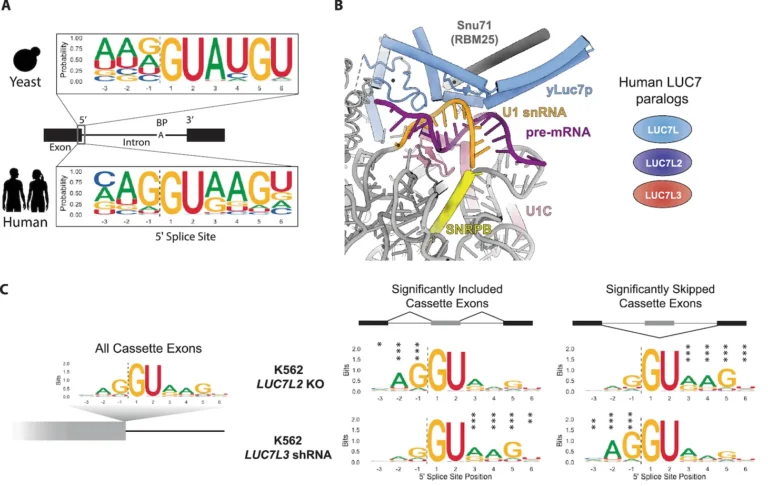
Myeloid neoplasms are linked to mutations or deletions of the U1 snRNP-associated factor LUC7L2, and cellular metabolism is changed when LUC7L2 is knocked down. Here, researchers from MIT demonstrate that members of the LUC7 protein family widely influence mRNA splicing in leukemias with LUC7L2 copy number variation as well as human cell lines, and they…

One of the most significant challenges in computational and experimental biology is creating RNA molecules that interact with particular proteins. The practical use of current computational methods is limited by their requirement for a significant number of empirically confirmed RNA sequences for every individual protein or a thorough understanding of RNA structure. Researchers have developed…

Many biological processes depend on RNA engineering, which advances the knowledge of life’s mechanisms and propels the discovery of new drugs. New strategies are made possible by improvements in RNA foundation models, but current techniques are still unable to produce unique sequences with particular functionalities. Here, scientists from Princeton University and BioMap Research present RNAGenesis,…

RNAs are crucial molecules that convey genetic information necessary for life, and they have a big impact on biotechnology and medicine development. However, the large body of literature frequently slows down RNA research. To overcome this, scientists from the University of California and Georgia Institute of Technology present RNA-GPT, a multi-modal RNA chat model that…
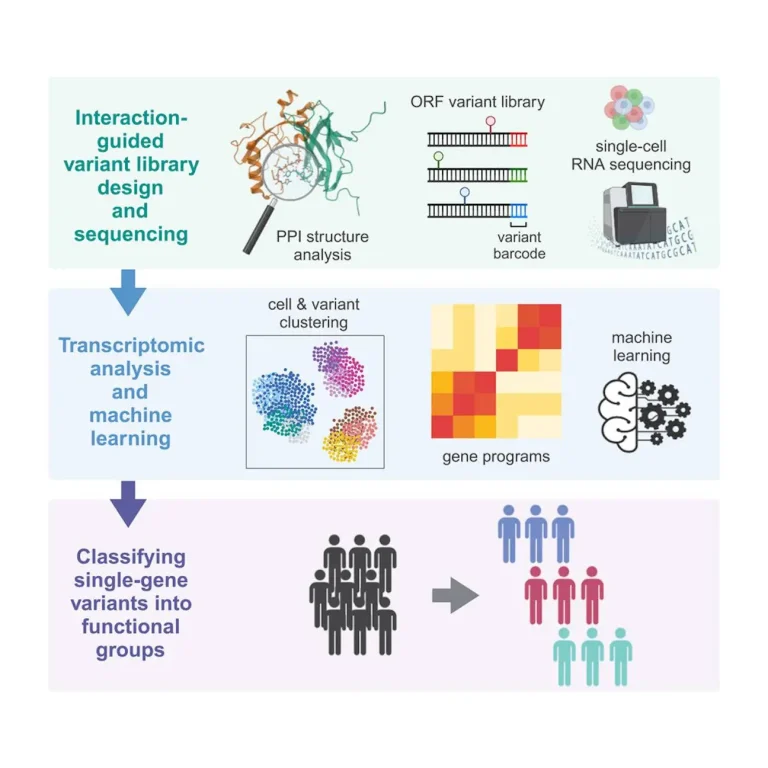
Researchers from the University of California deploy SEUSS (scalable functional screening by sequencing), a perturb-seq method, to analyze single-gene missense mutations, which have been notoriously difficult to interpret. The study focused on mutations in the RUNX1 gene, which is associated with myelogenous leukemia. Using SEUSS, the team evaluated 115 mutations and categorized them into three…

A part of systems biology is ‘designing RNA structures,’ which entails planning and organizing molecules of RNA into custom 3D formations with particular uses. RNA plays a dual role in cells, encoding genetic information and performing structural functions. Proteins are somewhat easier to study and model because of the precision nature of this macromolecule, while…

A recent study led by researchers from A*STAR explores the interplay between race and the function of the cell. Researchers used healthy blood samples obtained from more than 600 donors across seven population groups in five Asian countries to create the world’s giant scRNA-seq reference atlas called the Asian Immune Diversity Atlas (AIDA). This variety…

The Central Dogma of Biology describes the process of DNA (Deoxyribonucleic acid) undergoing transcription to form RNA (Ribonucleic acid) and transformation to form proteins finally. However, the interactions between proteins and RNA are also crucial in the optimal operation of various processes in organisms. Improving computational prediction of RNA-protein interactions (RPIs) is important for advancing…

Recent pioneering research by Université Paris-Saclay and Instadeep scientists has introduced a new technique, BulkRNABert. This method exploits a language model, an artificial intelligence (AI) that understands complex patterns to analyze bulk RNA-sequencing (RNA-seq) data to improve cancer prognosis. By diving into the symphony of gene activity in a tumor, BulkRNABert provides an exciting new…

In drug development, the accurate prediction of RNA structures plays a pivotal role. Leveraging the power of machine learning, particularly Variational Autoencoders (VAEs), has emerged as a game-changer in this domain. Recent advancements by Quantori LLC, Cambridge, USA researchers have showcased the superiority of VAE models in RNA folding, surpassing traditional methods with remarkable precision….
| Cookie | Duration | Description |
|---|---|---|
| cookielawinfo-checkbox-analytics | 11 months | This cookie is set by GDPR Cookie Consent plugin. The cookie is used to store the user consent for the cookies in the category "Analytics". |
| cookielawinfo-checkbox-functional | 11 months | The cookie is set by GDPR cookie consent to record the user consent for the cookies in the category "Functional". |
| cookielawinfo-checkbox-necessary | 11 months | This cookie is set by GDPR Cookie Consent plugin. The cookies is used to store the user consent for the cookies in the category "Necessary". |
| cookielawinfo-checkbox-others | 11 months | This cookie is set by GDPR Cookie Consent plugin. The cookie is used to store the user consent for the cookies in the category "Other. |
| cookielawinfo-checkbox-performance | 11 months | This cookie is set by GDPR Cookie Consent plugin. The cookie is used to store the user consent for the cookies in the category "Performance". |
| viewed_cookie_policy | 11 months | The cookie is set by the GDPR Cookie Consent plugin and is used to store whether or not user has consented to the use of cookies. It does not store any personal data. |